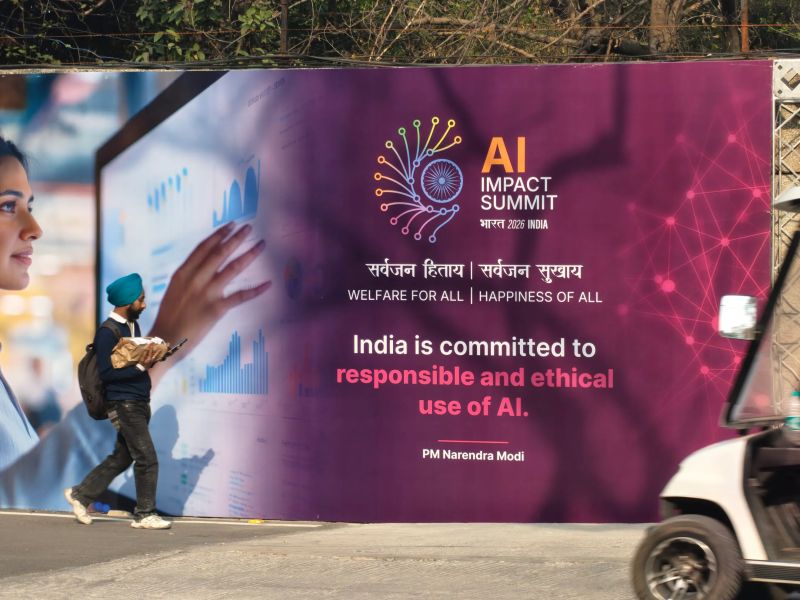
After every major global tech event, including recent AI summits, one thing has become clear that the narrative around AI has travelled far from its reality.
We are told repeatedly that AI is a revolution which will transform everything, replacing human intelligence. But I still think that it is not a revolution, it’s still a prototype.
What AI Is Actually Brilliant At
Every technological era like electricity, internet, mobiles, computers all started with the same conviction that this will change everything. And in many ways, they did transform the world. But it did not happen overnight. They evolved with systems, human adaptations and most importantly time. AI is now following the same path. The tools we see are impressive but are not complete.
To understand AI properly, we need to strip away the hype and look at what it actually is good at. Their real strengths are already helping industries like healthcare, finances and tech industries.
- Pattern Recognition
AI systems can detect patterns across huge datasets at a scale that humans cannot match. For example, in healthcare, this means identifying early signs of disease, spotting anomalies in patient records etc. AI does not overlook small inconsistencies, and this makes it incredibly valuable in environments where complexity and volume exceed human capacity. But there’s the difference we need to remember that AI does not understand these patterns, they only identify them.
- Data Analysis
What used to take analysts weeks or even months can now be done in minutes. AI can sort, filter, compare and summarize huge volumes of data with efficiency. They make it possible to make faster decisions in real time as AI can process data at a fast pace.
- Decision Support
AI does not make decisions independently, but it can support you on decision-making. It can give you insights, suggestions and recommendations based on the data that allow us to act faster and with more information. The final responsibility which is contextual and human still rests with us.
The Illusion of Autonomy
AI is usually described as autonomous intelligence, a system that learns, evolves and thinks independently. That is actually misleading even when they are not entirely false. AI does not think. It does not understand. It does not have judgments, all it does is respond.
Every output produced by an AI system is dependent on:
- the data it was trained on
- the prompt it receives
- the context it is given
- the corrections it has learned from
If the input is vague, then the output will be shallow. If the direction is flawed, then the result will be misleading. This is especially critical in healthtech as it can directly impact human lives.
It is to be noted that AI is only as effective as the thinking that guides it.
Why the Narrative Matters
You might wonder if it really matters what we call it. Yes, it does because narratives shape behaviour.
If we believe AI is fully autonomous then we trust it too quickly, questioning it less and integrating it blindly. If we recognize it as a powerful tool still under development, then we will use it more carefully, design better systems around it and maintain human judgements.
The difference between these two approaches will help us determine whether AI becomes a tool for progress or a risk.
AI as a High-Speed Assistant
Instead of seeing AI as a replacement for human intelligence, it is more useful to see it as a high-speed assistant. It may extend our capabilities but does not replace our responsibilities. It cannot bring ethical judgment, bring creativity or understand context fully and make decisions. These remain fundamentally human responsibilities, and they should remain that way.
Other than AI replacing human intelligence, there is another risk that we may voluntarily reduce our use of our own intelligence. When AI becomes easily accessible and highly efficient, the temptation is not to collaborate with it but to rely on it completely, letting it think for us instead of helping us think better.
This brings us to the most important question, not just technological, but philosophical. Are we using AI to think better? Or are we slowly outsourcing thinking altogether? Using AI to think better means engaging with it actively. You ask clear questions, challenging the responses it gives and becomes a collaborator. Here, human intelligence is still at the centre. Outsourcing thinking is very different. There you accept summaries instead of reading full contexts and come to conclusions without forming an independent view. You become less engaged.
The danger is not that AI will replace human intelligence. The danger is that we may voluntarily reduce our use of it.


How Artificial Intelligence is Creating Internal Asymmetry in Teams as AI Skills Become the Biggest Career Advantage

Why Great Engineers Sometimes Fail at Problem Solving: The Difference Between Building Technology and Solving Customer Problems

Escaping the Workaholic Mindset: Work-Life Balance Starts with Self-Worth