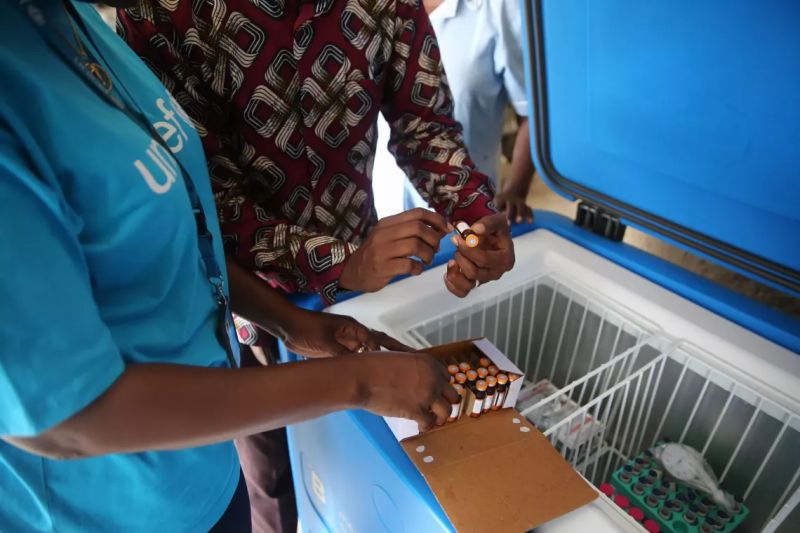
For decades, healthcare innovation has been measured by what we can add like new machines, advanced drugs, smarter diagnostics and faster algorithms. But some of the most powerful breakthroughs do not come from adding more complexity, but through a simple action. Today, one of the most transformative healthcare innovations is simple: switching off the fridge. This is what is happening- half of all vaccines in the world get wasted just because they need to be kept cold. This requirement known as the cold chain is one of the most fragile and expensive systems in healthcare across the world.
Now, UK scientists are testing fridge-free vaccines that can survive room temperatures for up to 18 months. There will be no refrigeration, no ice packs and no special transport. These vaccines are still in clinical trials. But if they succeed, they will not simply improve healthcare delivery, but also, they will fundamentally redefine it.
The Cold Chain Problem
Vaccines are one of the most effective public health solutions that has been created. They prevent disease, reduce healthcare costs and save millions of lives each year. Still, their success depends on a system that is too fragile. The cold chain requires:
- Continuous refrigeration from lab to patient
- Reliable electricity
- Temperature monitoring at every stage
- Backup systems for outages and transport delays
In theory, this system works. In reality, it frequently fails. When vaccines spoil, the loss is often invisible, not anything dramatic but something more like fewer immunised people, higher disease risk and wasted investment.
According to global health estimates, up to 50% of vaccines are wasted worldwide, much of it due to cold chain failures. This is not a scientific failure. It is a system failure.
Fridge-Free Vaccines
Fridge-free vaccines challenge an assumption in medicine that biological stability requires constant cold storage. Now using advanced stabilisation techniques, scientists are creating versions that can survive at room temperature for extended period of time, sometimes up to 18 months. This changes everything.
A vaccine that does not require refrigeration:
- Can be transported without ice packs
- Can be stored safely in clinics without reliable electricity
- Can be delivered rapidly during emergencies
In short, it becomes usable where healthcare is needed most, not just where infrastructure is strongest.
Why Fridge-Free Vaccines Matters
Healthcare breakthroughs are often evaluated by the quality of something new and unusual such as a new device or a new AI model. But real-world impact depends on scalability, accessibility and reliability. Fridge-free vaccines do not just improve vaccination, they remove some of the biggest hindrances in healthcare. The fridge-free vaccines are still in clinical trials. They must prove long-term safety, consistent efficacy, regulatory compliance and cost-effectiveness.
1. Better Vaccine Access in Rural and Remote Areas
Remote villages, island communities, mountainous regions and refugee camps often lack consistent availability of electricity. Maintaining cold storage in these environments is costly and fridge-free vaccines eliminate this barrier. Healthcare workers can carry vaccines safely for days and reach communities without worrying about temperature.
2. Huge Cost Savings for Governments and NGOs
Cold chain systems are expensive as they require:
- Refrigeration equipment
- Fuel or electricity
- Maintenance and repairs
- Monitoring systems
- Special transport systems
For governments and NGOs operating under tight budgets, these costs limit the scale. Fridge-free vaccines reduce storage costs, transport complexity and wastage due to spoilage.
3. Faster and Smarter Emergency Responses
During health emergencies like pandemics or natural disasters, speed matters at that time. Cold chain requirements slow everything down. Vaccines must be carefully packed, monitored and transported, which often delays transport when time is critical. Fridge-free vaccines allow for rapid distribution and faster mass immunisation.
Innovation That Understands the Reality of Healthcare
Fridge-free vaccines are powerful not because they are technologically flashy, but because they reduce all the operational burdens. They remove one more thing that healthcare workers have to worry about. There will be no panic over power cuts, no last minute wastage and just care delivered where it is needed.
The story of fridge-free vaccines shows that progress is not always about doing more. The future of healthcare will not be built solely on advanced technologies, it will be built on scalable solutions and innovations that simplify things rather than complicate it further. This defines real innovation.
We should ask what unnecessary constraints are holding healthcare back and sometimes, the biggest breakthroughs come not from adding something new but from removing something old.
If switching off the fridge can bring up such transformative change, it raises an important question for all of us working in health care and health tech, what is the problem you face most often in the healthcare world. And this is where the next real breakthrough is waiting.


Why Emerging Cities in India Are the New Goldmines for Real Estate Investment

Are You Getting the Respect You Deserve as a Mentor?

Why Flip Through Paper When You Can Easily Scroll Through Digital Data