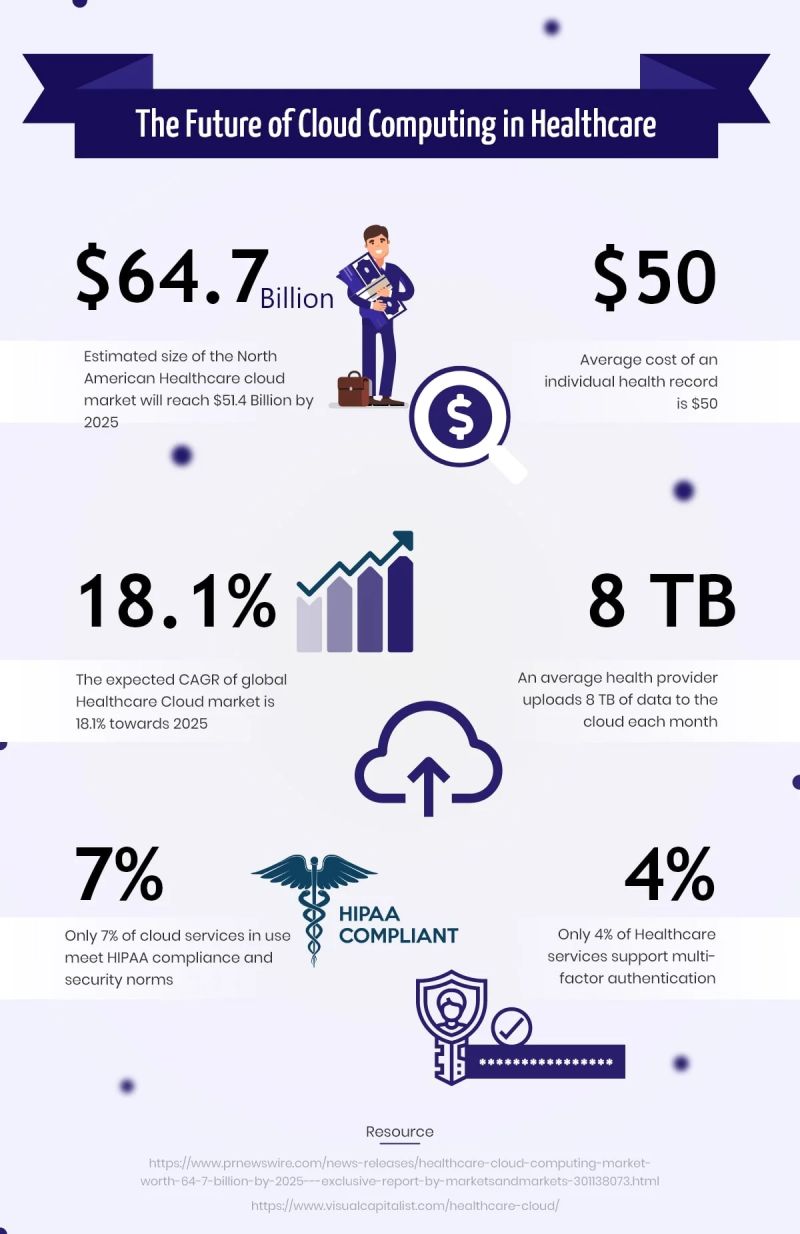
The Cloud has been said as the inevitable future of healthcare by everyone. Somewhere along the way, an assumption has crept in that the cloud itself would fix everything. In fact, for many healthcare organizations, cloud migration has exposed a deeper issue of continuity.
At Elixr Labs, we believe it is time to challenge this narrative. Cloud is not inherently the future of healthcare. The Cloud is only as strong as the systems built on top of it and most healthcare systems today are not ready.
In most industries, a cloud outage is frustrating. In healthcare, it can become catastrophic. Most hospitals and startups have moved to the cloud hoping it would fix everything like speed, scalability and security. But what they really discovered was dependency. If a laboratory information system crashes, it can be rebooted. But when a hospital’s cloud instance fails mid-surgery or when a diagnostic API stops responding during an emergency situation, then that is dangerous as the consequences are immediate and real. Because of it the care is delayed and thus lives are put at risk.
The Real Challenge
The problem is not that healthcare has moved to the cloud. The problem is how it moved. Most healthcare systems today replicate old architectures in new environments, carrying the same fragility just at scale. True healthcare-ready cloud infrastructure must be designed differently. It must assume failure as inevitable and build resilience into the system itself.
At Elixr Labs, we focus on three core principles on building infrastructure:
1. Systems that self-heal before clinicians notice if something goes wrong
In healthcare, a good system does not wait for an alert to be acknowledged. It detects the problem, reroutes, restarts services and restores functions automatically even before the users realize that something went wrong. Self-healing infrastructure means:
- Predictive failure detection
- Automatically switching to backups when failures occur
- Multiple backup methods so that essential functions continue even if one path fails.
- Hands-free recovery
The goal is simple. The clinicians should never have to think about infrastructure while treating patients.
2. Prioritises critical workloads over idle ones
It is known to us that not all workloads are equal in healthcare. Yet many systems treat them the same. We design architectures that prioritize life-critical operations, allocate resources based on the clinical urgencies and defer or non-essential processes automatically. And it reduces latency where it matters. This is not about speed for speed’s sake. It is the performance which is aware of the context.
3. Learning from failure and not just logging it
Most systems record failures and they move on. Healthcare systems must do more. Every failure is a data point, and they should consider it as a lesson. It is to be done so that they do not repeat the same mistakes at a larger scale and infrastructure should continue to evolve based on what goes wrong. In healthcare, learning from failure is not optional but it is ethical.
The Indian Healthcare Reality
I have learned in healthcare, especially in India, cloud is not about computing power. It is about continuity. In India, these challenges are amplified. Healthcare infrastructure operates under inconsistent network connectivity and resource constraints in many parts of the nation.
Healthcare often seems to focus only on adoption metrics more than anything. But adoption without architectural readiness creates fragility in the system. It is the same in the other scenario as well. Even the best architecture fails without proper adoption like without training, workflows and clinical alignment. This means that healthcare transformation requires both. Adoption and architecture are both equal problems. That is what we aim to solve with Elixr Labs.
At Elixr Labs, we work at this intersection designing systems that are technically resilient and realistic in operation.
Every health tech founder should know that the future of healthcare is not defined by the number of cloud services used, the size of the infrastructure budgets or the speed of deployment. It is defined by one simple question that can the system be trusted when it matters most? Because in healthcare especially in India technology does not succeed just by being powerful. It succeeds by being present, reliable and unbreakable when lives depend on it.
A system that is fast but fragile is not future-ready. A system that scales but fails silently is not future-ready. A system that logs errors instead of preventing them is not future-ready. In a world where every second counts, the cloud cannot just be fast, it has to be failproof too.
Has your system faced problems with the cloud?


How My Family Trip Reminded Me of The Importance of Effective Leadership Skills

Highs, Lows and Everything in Between : The Unfiltered Truth About Starting a Business

The Indispensable Role Healthcare Workers Plays in Our Darkest Hours