Employee loyalty has always been one of the most celebrated measures of a company. Someone has been with a business for 10 years and someone else has spent their entire career in the same organization. We look at them as loyal employees. Their years of service become a badge of commitment, while companies proudly celebrate long-service milestones as proof that they have built something worth staying for. There is nothing wrong with that. People who have spent years building a business, solving difficult problems and contributing through different phases deserve recognition. Long careers can represent trust, commitment and extraordinary growth.
But tenure and loyalty are not necessarily the same thing. Someone can stay with an organization for 15 years because they continue to grow, take on bigger challenges and find new meaning in their work. Someone else can stay for the same 15 years because leaving feels uncomfortable, the role has become familiar and there is no strong reason to make a change. One of the most interesting examples I have come across while thinking about this is NVIDIA.
NVIDIA and a Different Kind of Employee Loyalty
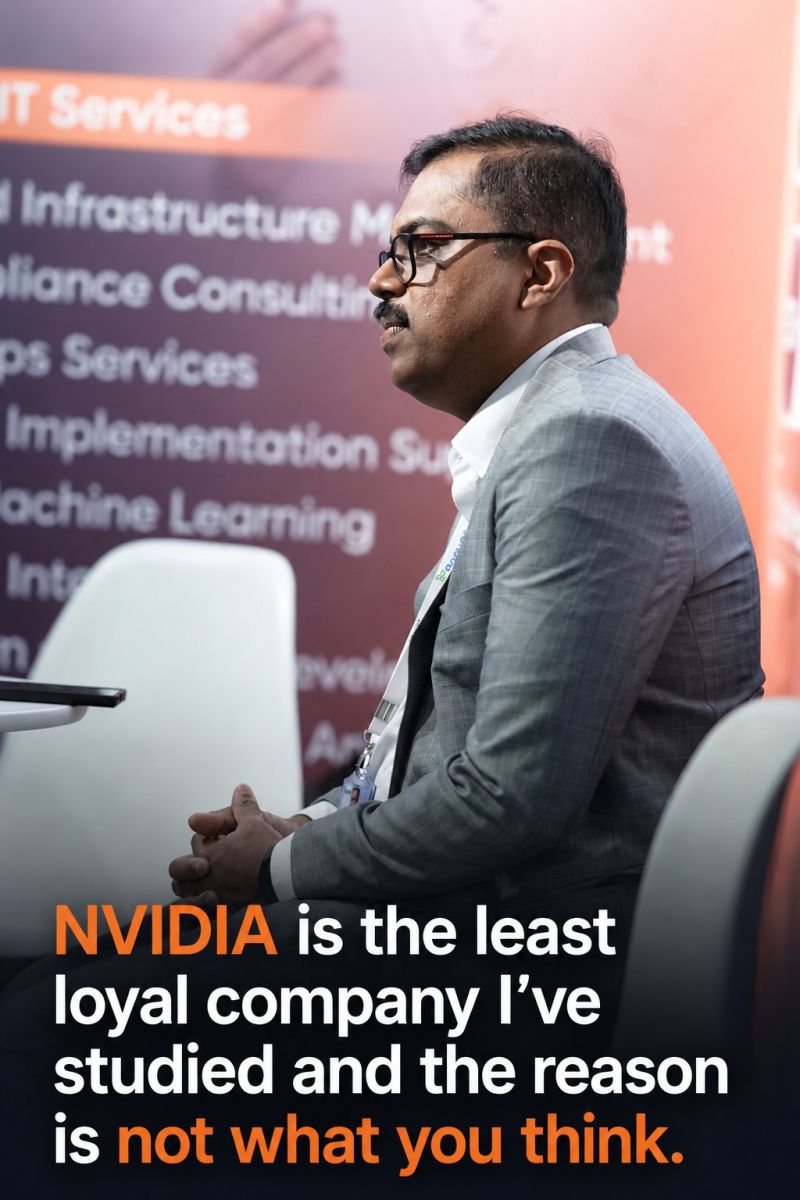
NVIDIA is, in many ways, one of the least loyal companies I have studied. That may sound strange for a company known for exceptionally low employee turnover. Its voluntary attrition has been reported at around 2.7%, significantly below the technology industry, where employee turnover is much higher. On the surface, it looks like an extraordinary story of employee loyalty. But I do not think loyalty is the most interesting explanation.
People are not necessarily staying at NVIDIA because they feel they owe the company something. They are staying because the opportunity keeps getting better. The problems become harder, the technology becomes more ambitious and the impact becomes greater. For many people, the ownership they can take continues to expand. This creates a very different kind of employee relationship.
The company is not simply asking people to stay loyal to the organization. It is continuously giving them new reasons to remain interested in what comes next.
The 2023 Layoff Wave
The technology industry went through a major layoff wave in 2023. Companies that had aggressively hired during periods of rapid growth suddenly began cutting thousands of jobs. Some companies were restructuring and others were under pressure to reduce costs and improve profitability.
When NVIDIA did not participate in the same kind of large-scale layoff wave to the extent many other technology companies did, it would have been easy to describe that as a gesture toward employees, like a company that cares about its people. But that explanation misses the more interesting point. The business did not need the same kind of cuts. The opportunity ahead was enormous and they needed people capable of building what came next. So, the story was not sentimental. It was value. The company wants the employee to stay because their capability, experience and contribution continue to create value. That is a healthier relationship than loyalty based on obligation because loyalty is staying even when the deal gets worse, and value is staying because the deal keeps getting better.
When Tenure Becomes the Goal
There is nothing wrong with recognising people who have built a long career with an organization. The problem starts when tenure becomes the goal itself. We start treating the number of years as an achievement. But what actually happened during those years?
We assume that someone who has stayed for 15 years is automatically more committed than someone who has been there for three. But the employee who joined three years ago may have transformed five functions, built new capabilities, led difficult projects and taken on responsibilities that changed the business.
Real experience comes from exposure to new problems, new decisions, new responsibilities and sometimes failure. A person can repeat one year of experience twenty times. Another person can experience twenty years of growth in five. Companies need to become more careful about what they celebrate.
The Harder Question for Startups
Startups have an even more difficult challenge. A large company can create opportunities internally. There may be hundreds of teams, departments, products and markets. An employee who has mastered one role may be able to move to another. A startup cannot always offer that. There may only be one team and one version of the company. The next opportunity is not waiting somewhere inside the organization. It has to be created.
Leadership becomes much harder. A startup cannot simply tell talented people to stay because they are part of the family. Every talented employee needs to see a future that is larger than their current job description. It does not mean inventing promotions or giving people titles without substance. It means understanding what talented people actually need to continue growing.
NVIDIA's story is interesting not simply because people stay. Many companies can retain people for long periods. The more important question is whether those people continue to find reasons to stay.
As leaders, our goal should be to build a company where, year after year, talented people look at what is ahead and say that there is still something here worth staying for.
At what point does tenure stop being loyalty and start becoming inertia?


Why Emotional Intelligence Is Becoming the Leadership Skill Modern Companies Can No Longer Ignore

Why the Doctors’ Strike is a Warning Sign of a Growing Healthcare Crisis
How Employee Initiative Helped Us Build a Responsible Team Culture