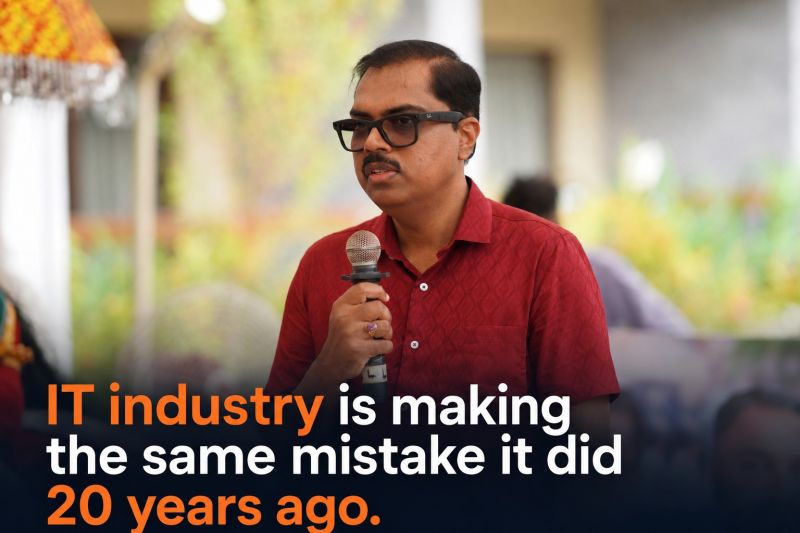
We are repeating the same mistake we made 20 years ago. Back then, organisations invested heavily in ERP systems, CRMs, enterprise platforms and other digital technologies because there was a strong belief that better technology would automatically create better businesses.
A new system could bring data together and make processes more standardised. Organisations could finally replace fragmented ways of working with a connected digital environment. But within months of implementation in many companies, people slowly found their way back to spreadsheets, emails, manual reports and familiar processes.
For a long time, it was easy to blame the technology telling that the system was not powerful enough or maybe the implementation was not done properly. But after seeing this happen firsthand, I now look at it differently. And as organisations rush to adopt artificial intelligence, I believe we are at risk of making exactly the same mistake again.
AI Adoption Starts Beyond the Technology
During my time at Wipro, I once walked into a post-implementation review at a client site. The system was live and the technology was available. But when we looked at how decisions were actually being made, something stood out. They were still relying heavily on Excel sheets that nobody had planned for. Familiar manual processes continued alongside the new system. People had developed their own workarounds because those were the methods they trusted.
The issue is not necessarily resistance to technology. People resist changing a system of work when they do not understand what the change means for them. A new technology can alter responsibilities, decision-making authority, workflows and even professional identity. For someone who has spent years developing expertise in a particular way of working, adopting a new system is not simply a matter of learning another interface. It can mean reconsidering how they work.
- Will the AI be right?
- Can I trust its recommendation?
- What happens if it makes a mistake?
- Am I still responsible for the decision?
- Do I need to change skills I have spent years developing?
These are not technology questions. They are human, organisational and leadership questions. This is why successful AI adoption in healthcare cannot be measured simply by the number of tools deployed or the number of employees given access to an AI platform. The more meaningful question is whether AI is improving the way people perform their work.
If an AI system generates a recommendation but the clinician spends more time verifying, copying and reconciling information across multiple systems, the organisation has not necessarily created better healthcare technology. It has only created another step in the workflow. The objective should be to remove this unnecessary friction from meaningful work.
Why Trust Matters in AI Adoption
One of the biggest challenges in healthcare AI adoption will be trust. Healthcare is a particularly sensitive environment because the consequences of a poor decision can extend far beyond productivity or revenue. AI systems may assist with clinical interpretation, documentation, prioritisation or operational decisions, but the organisation still needs clear boundaries around how those outputs are evaluated and used. People need to understand not only what AI can do, but also when they should trust it and when they should question it. This requires a different kind of organisational culture. Employees should feel comfortable using AI while also challenging its output. They should know when human judgement is essential. Without the clarity, organisations can end up in one of two extremes. People either use AI without enough caution, or they avoid using it altogether.
Successful organisations will build a middle ground where AI supports human decision-making instead of replacing responsibility. It requires training, communication, clear policies, leadership support, and most importantly, time for people to adapt. Trust cannot be implemented through a policy document. It develops through experience. People need opportunities to use AI, observe its strengths and limitations, question its outputs and gradually understand where it adds value.
Successful Transformation Needs Leadership
This is also why leadership plays such an important role. Employees watch what leaders do. If leadership talks about AI but continues relying entirely on old processes, employees receive a very different message. If leaders experiment with AI, openly discuss its limitations, encourage responsible use and create space for employees to learn, the organisation starts developing a different attitude towards change.
Twenty years ago, many organisations learned that implementing technology was easier than changing behaviour. AI is giving us the opportunity to learn that lesson before repeating it at a much larger scale.
For healthcare organisations and healthtech companies, this matters even more. The objective of technology should never be technology itself. It should be better decisions, better workflows, better experiences and ultimately better outcomes. The organisations that succeed will be the ones that understand how to bring people along with the technology.

AI and the Future of Jobs: How AI Changed the Rules of Career Growth

Why This Simple Hiring Test Has Become My Important Interview Tool for Hiring Process

When AI Deleted a Company's Database in 9 Seconds: What Every Founders and Leaders Needs to Know About AI Governance