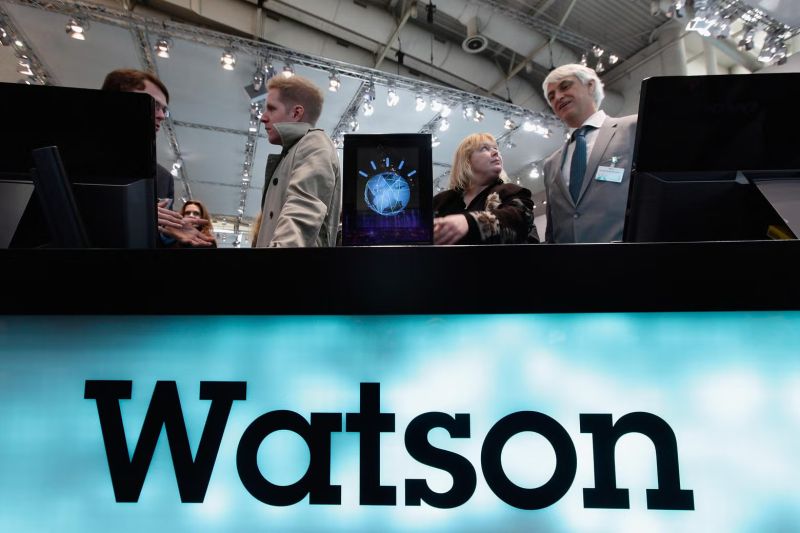
In 2011, after Watson won Jeopardy! IBM set its sights to fix healthcare, especially in cancer treatment. Their vision was ambitious, an AI-powered system capable of reading every medical journal, clinical trial and case study ever published, and then turning that information into personalized treatment recommendations for patients. They have spent nearly $4 billion to buy healthcare data companies, burned billions more on R&D and marketing and ten years later, the dream ended quietly. They sold Watson Health for about $1 billion as a clearance sale.
On paper, Watson looked fine but in reality, it was a chaotic one.
A System Built on Fragile Foundations
The vision was bold but the execution of it showed many flaws starting with how Watson was trained. There was no real-world patient data they worked on. They lacked the messy and unpredictable complexity of real clinical situations.
Healthcare is not a controlled laboratory setting. Patients come with different conditions, incomplete histories and varying responses to treatments. By relying on idealized data, Watson developed a limited and often unrealistic understanding of medical decision-making. The result was a system that could perform impressively in demonstrations but struggled when faced with real patients.
Unsafe Recommendations
Another issue was the quality of Watson’s treatment recommendations. Internal reports later revealed that the system suggested therapies that were not only inappropriate but were dangerous. In some cases, it recommended drugs that could increase the risk of fatal bleeding in already critical patients. In medicine, we know that even small mistakes can bring life-threatening consequences. For other industries, failure might mean financial loss or inconvenience, but in healthcare it demands a high standard of accuracy and reliability.
The Trust Gap
Even if Watson had sounded technically right, its success depended on adoption by healthcare professionals and that never truly happened. Instead of simplifying workflows, it often required additional hours for data entry and verification. Moreover, clinicians did not trust its recommendations. Medical decision-making is deeply human as it is not just about data, it also includes experience, intuition and ethical considerations. The doctors in general are trained to weigh risks, consider patient preferences and adapt to different situations. But Watson operated within the rigid boundaries of its programming and training data. Without gaining trust from doctors and patients, even the most elegant technology cannot succeed in healthcare.
Lessons from the Watson Health Collapse
Data Quality Matters More Than Data Quantity:
Having a huge amount of data does not automatically make AI smart. What matters is whether the data reflects real-life situations. In Watson’s case, much of the data came from limited sources and controlled environments, which did not fully match how hospitals actually work and as a result, its recommendations did not fit real patients.
Healthcare Is Not a Typical Tech Problem:
Healthcare is very different from industries like shopping or banking. Here, mistakes can cost lives and not just money. Doctors must consider ethics, patient history and unpredictable conditions. AI systems designed like regular tech solutions usually fail as they could not account for these complexities.
Trust Is Non-Negotiable:
Doctors would not use a system they do not trust no matter how advanced it is. For AI to be accepted, it must clearly explain how it arrives at decisions, give consistent results and fit smoothly into the hospital's daily routines. Watson struggled here, as many clinicians found it hard to rely on its outputs.
Intelligence is Not Wisdom:
AI can process large amounts of information and identify different patterns, but that does not mean it understands context like humans do. In healthcare, decisions often depend on subtle factors like a patient’s lifestyle, emotions or unique medical history. Watson had intelligence but lacked wisdom or human judgment.
AI in Healthcare
The failure of Watson Health does not mean that AI has no place in medicine. Everyday AI continues to show promise in areas such as medical imaging and diagnostics, drug discovery and predictive analytics. AI always works best as a tool, but they are not a replacement for human expertise.
And moving forward, if the goal is to integrate AI into healthcare effectively, the approach must change. Instead of trying to build an all-knowing AI doctor, developers should focus on adding human decision-making rather than replacing it and collaborating closely with clinicians.
The story of Watson Health is in many ways a story of ambition outpacing reality. It began with a bold vision to revolutionize cancer care using artificial intelligence but it ended as a reminder of the limits of technology when applied without sufficient understanding of the context. But this has also provided critical insights into what works and what does not in the health tech. As we continue to explore the potential of AI, the challenge is not to replace doctors, but to empower them by ensuring that technology will be a partner in care and not a risky substitute.
What are your thoughts on this cancer treatment going wrong?

Samsung India’s Leap into Advanced Transformative Healthtech

The Hidden Side of Leadership: The Story Behind the Techzila Podcast
Beyond AI and Futuristic Tools: The Foundational Healthcare Breakdown We Cannot Ignore