
A new team member asked me something yesterday that made me pause: “How do you think of solutions so fast?” It’s the kind of question people expect a clever answer like a proper framework or a productivity hack. But I had to be honest. I don’t have a framework and I don’t run my health tech company using a secret dashboard that magically generates clarity.
What I do have and what has kept me in technology for 20 years is curiosity and discipline. It sounds cliché but it’s not. The people who find answers are the ones who refuse to stop looking.
The Myth of the “System”
In tech, people focus on systems. Systems are comforting because they create the illusion of control. They suggest that if you just follow the right steps, clarity will follow. Systems matter as they scale execution, reduce chaos and help organizations function. But systems do not create insight. And if you ask where insight actually comes from, especially in complex domains like health tech, the honest answer is they come from staying relentlessly curious, especially about things that are not immediately your responsibility.
When you operate in health tech, you are navigating clinical risk, data privacy, interoperability and regulatory constraints, and no single framework can fully capture that complexity. But curiosity can. Technology moves fast and healthcare moves carefully. The people who survive and thrive are not the ones who memorized the best practices of 2012. They are the ones who kept learning in 2013, 2017, 2021 and now in 2026.
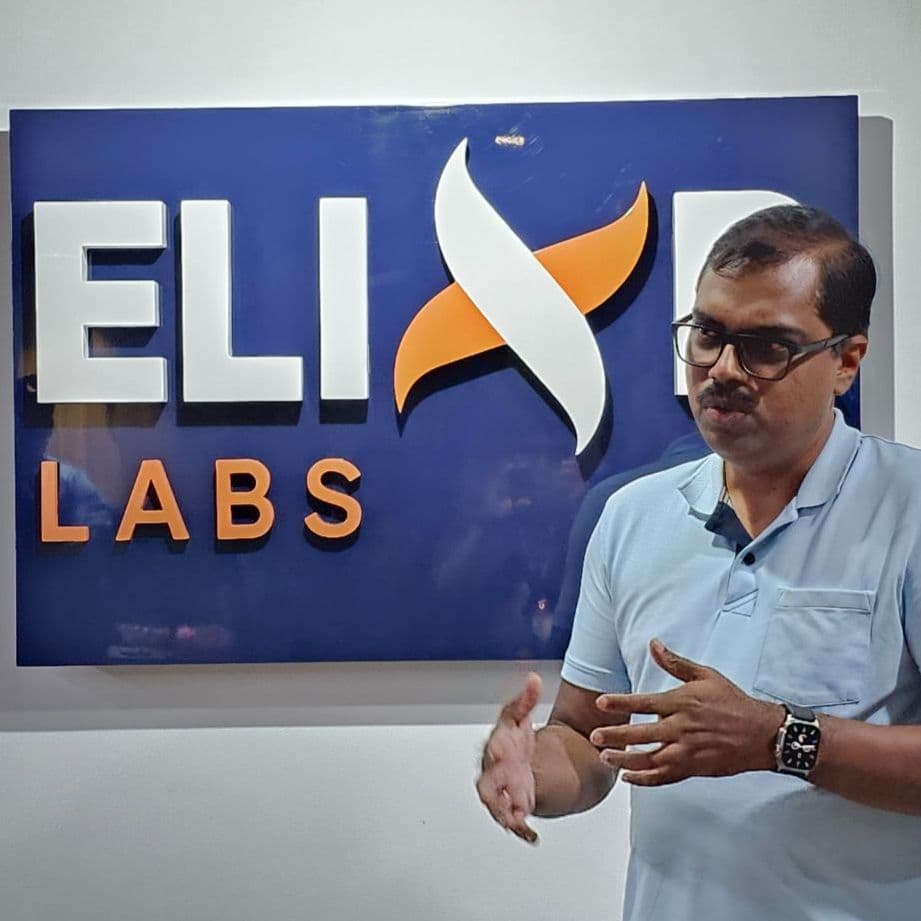
The only reason I am still here and now leading Elixr Labs is because I refused to stop learning as curiosity became a daily practice.
My “Non-System” System
When someone says, “You think of solutions so fast,” what they are really observing is pattern recognition. If you read consistently, talk to different stakeholders, explore around industries, stay updated on regulatory shifts, watch emerging AI capabilities and reflect on past failures, then you build a deep internal library. When a problem appears, your brain does not start from zero. It says: “This mirrors something we saw before.”
If you looked at my week, you would find three simple behaviours.
1. Every Week, I Learn Something New About AI
AI is transforming healthcare faster than most people realize, in deeply practical ones like clinical decision support, diagnostic modelling, predictive health, workflow automation and multimodal medical intelligence.
I make it a rule to learn something new about AI every week. Because as a founder, I must understand what’s becoming possible before it becomes obvious. Curiosity lets you see around corners.
2. I Learn the Things No One Else Is Incentivized to Think About
This is the real unlock. Every role comes with incentives and incentives shape attention. Engineers optimize for architecture and performance. Clinicians optimize for safety and outcomes. Investors optimize for returns. They are all necessary, but who is thinking about the blind spots? Often, no one. As a founder, I try to live in those gaps. That is where solutions emerge from the questions that no one is paid to ask.
The Discipline to Stay Curious
Staying curious requires listening when you disagree, asking questions when you feel competent, letting go of ideas that once worked but no longer fit now and updating beliefs when new evidence appears.
In global health tech, ego is expensive. The moment you assume you fully understand the landscape, you fall behind. The shifts are happening under your feet with new regulations, new models of care, new patient expectations and new AI capabilities that quietly make last year’s expertise partially outdated.
Leadership, I have learned, is not about having the loudest voice in the room. It is about holding the widest lens. It means being willing to sit with ambiguity longer than most people are comfortable and valuing questions as much as answers.
How I Keep Up with the Times
So how do I actually keep up?
More than anything else, I protect curiosity as a daily practice and not as something I do once the real work is finished. I believe that curiosity is not something you schedule once you are done. It is something you build into how you lead, how you listen and how you decide.
If you want to think faster, do not look for a faster method, build a deeper one. As we build the future of health tech at Elixr Labs, curiosity is what continues to shape how I lead. It widens the lens and reminds me that expertise expires faster than we expect, and that the most dangerous moment is when you believe you have figured it all out.
How do you keep up with the times?


Here’s How We’re Taking Our Global Presence to the Next Level in 2025!
A Strong Start to 2025: Kicking Off the Year with ISO 27001:2022 Certification

Leadership in Health-Tech: Why Being a Problem Finder Matters More Than Being a Problem Solver