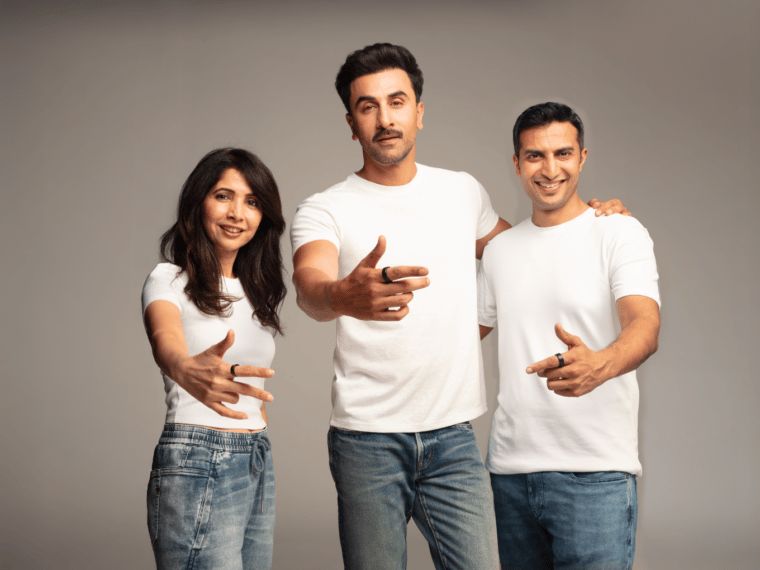
Ranbir Kapoor and your health will have something in common. And no, it has nothing to do with films. The Bollywood actor has invested in Gabit, a health tech company building.
A successful actor or athlete would attach their name to a skincare line, a fragrance, a fashion label, or a jewellery brand, ventures that mirrored their public persona and for visibility.
But something is quietly changing.
When Ranbir Kapoor invested in Gabit, a health-tech startup building what it calls a “longevity ecosystem,” the move felt different. Not because celebrity investments are rare but because this one did not chase anyone. It is not something flashy or like that fits into the Instagram friendly glamour.
It’s a titanium smart ring that tracks sleep, stress, recovery and fitness, paired with an AI health coach, supplements and even skincare. Kapoor himself mentioned that he loves the ring as it “quietly fits into your life. “That phrase may explain more about the future of consumer tech than any marketing deck.
The Wearable Market Was Supposed to Be Slowing Down
Fitness bands feel repetitive.
Interestingly, not all wearable devices suffered. According to industry trends, smart rings and smart glasses were showing growth. Unlike bulky wrist-worn devices, these wearables integrate into daily life. Smart rings especially represent a shift from performance tracking to wellness monitoring. They are less about how many steps you took and more about how well your body is coping with your sleep cycles, stress levels, recovery and long-term health patterns.
A titanium smart ring that quietly tracks your body while you live your life fits neatly into this evolution. It does not compete with fashion but it complements it and it does not demand attention but it offers reassurance. One of the most compelling aspects of smart rings is their invisibility. They collect data silently in the background, bringing insights only when needed.
This is why Gabit’s positioning as a “longevity ecosystem” matters. It is not selling a gadget, it is selling a philosophy of proactive health. The ring is just the starting point. The AI coach interprets your data. The supplements and skincare close the loop. The product is not to be replaced every year, but it is meant to become part of your identity.
In that sense, the smart ring may be closer to a luxury watch than a fitness tracker not because of price, but because of its symbolism.
Why Celebrity Influence Still Matters Here
Celebrities no longer just support products, they also shape aspirational behaviour. What they eat, how they train, how they rest, all such choices carry cultural weight. And here, health becomes something worth investing in and not just consuming passively. And when figures like Zomato’s Deepinder Goyal and CRED’s Kunal Shah also back the same company, the signal grows much stronger.
Unlike skincare or fashion, health tech requires trust. People do not just buy a device; they look for data accuracy, privacy and long-term use. Celebrity involvement helps to normalize adoption as it reduces skepticism and makes the unfamiliar feel safe. It pushes health tracking out of niche fitness communities and brings it into the mainstream lifestyle conversations.
Kapoor’s comment about the ring “quietly fitting into your life” resonates because modern consumers are tired of being managed by their devices. They want tools that support and not dominate their routines. This design philosophy may explain why actors, founders and high-performing professionals move towards such products. Their lives are already hyper-visible and over-scheduled. A health device that works silently aligns with the desire for balance and control.
Is This Just Another Trend?
Skepticism is valid as the tech world is full of trends that burn bright and fade fast. Celebrity-backed products often struggle once the popularity wears off. But health tech operates differently from fashion or beauty. Once people experience the benefits of continuous health data like better sleep, improved recovery, early warnings they are less likely to abandon it.
Smart rings do not replace doctors, but they bridge the gap between the health checkups and daily busy life.
Is this just another trend people are backing, or would you buy a ring like this? And the bigger question followed is not whether everyone will buy it but whether enough people will start seeing health as worth investing in.
And one thing is clear: the conversation around health, technology and influence is evolving and it is doing so quietly, one ring at a time.


9 Out of 10 Startups Fails, But Why is Healthcare IT Defying the Odds?
How We Built a Winning Healthcare IT Startup in a Crowded Market

What Keeps Me Going Strong After Working for 20 Years?