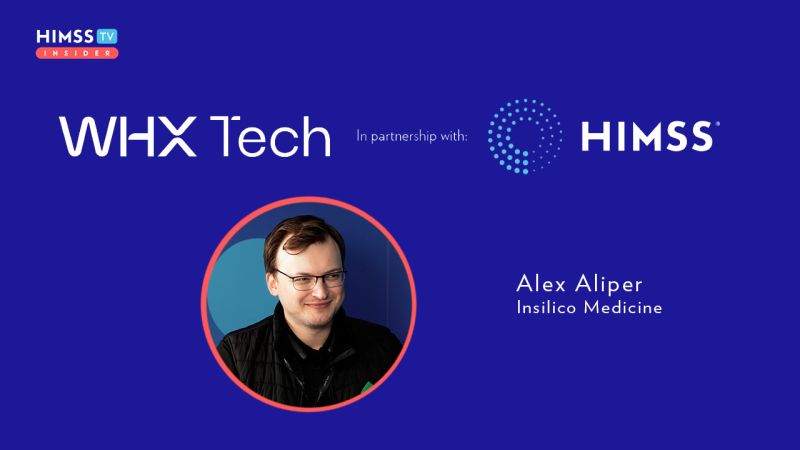
At WHX Dubai this year, one company stood out and genuinely made me stop and read everything thoroughly. They are Insilico Medicine. They are not just using artificial intelligence to assist researchers. They are using Generative AI to design entirely new drugs from scratch.
Searching for Drugs to Designing Them
Traditionally, drug discovery has been one of the slowest and most expensive processes. It can take 10 to 15 years to bring a single drug to the market. Most candidates fail somewhere along the journey. It is a process rooted in trial, error and time.
Now with the AI systems, they can predict molecular structures, know how they interact with the human body and generate entirely new compounds. That’s what Insilico Medicine is doing. They are moving from AI as a research assistant to AI as a drug designer.
One of the most striking aspects of Insilico’s work that impressed me was not just the technology, but where it’s happening. They have built one of the largest AI + quantum computing-driven drug discovery R&D centres in Abu Dhabi. This is big because for decades, drug innovation has been dominated by The United States and Europe. But now, we are seeing a geographical shift in innovation power.
The Challenges We Cannot Ignore
For all the excitement around AI-driven drug discovery, it’s important to step away from the hype and look at the reality. This is not about dismissing the potential of AI, but we need to know that AI-driven drug design comes with few real risks as well.
The Data Problem:
Every AI system depends on data. AI is only as good as the data it learns from. If medical datasets are biased, incomplete or poorly structured, then the AI will produce flawed outputs faster and more confidently. For example, if a dataset only includes patients from a specific region, the AI may design drugs that work exceptionally well for that group but less effectively for others. Unlike humans, AI does not question the data, it trusts it. So, when errors exist, they get amplified and not corrected. This raises ethical and clinical concerns.
- Biological Reality:
We know that the human body is unpredictable and complex. While AI can simulate molecular interactions or predict how a drug might work, these simulations operate within simplified models. Once a drug enters a living human body, it will encounter layers of complexity that no simulation can fully capture. Thus, what works in a model or in a lab can fail inside a living human body due to:
- Immune responses
- Metabolic differences
- Unknown biological interactions
Regulatory Trust and Approval:
Healthcare is one of the most tightly regulated industries in the world for good reason. Any new drug must pass through various testing and validation processes to ensure it is both safe and effective. When AI enters this space, it adds to another layer of scrutiny. Regulatory bodies will naturally demand higher standards from AI-designed drugs because the decision-making process behind these drugs is more complex than traditional methods. They ask for developers to demonstrate how it was designed, what data was used and whether the process can be trusted. This leads to longer validation phases and more extensive documentation. This might slow down the speed at which AI-driven drugs reach the market, but this is necessary to safeguard patient health.
There is also a challenge of building institutional trust. Regulators, healthcare providers and pharmaceutical companies must all align and trust on how AI is used, evaluated and monitored. Without this alignment, even the most amazing innovations may struggle to move forward.
The Explainability Gap:
Doctors and patients need to understand why and how the drug works. Most AI systems produce results without clearly explaining things. Doctors need to understand why a drug works before they can confidently prescribe it. Patients, too, want clarity especially when it comes to treatments that affect their health.
If an AI system cannot clearly explain its mechanism of action, it becomes difficult to build trust.
Would You Trust an AI-Designed Drug?
There would be hesitation among many in adopting what AI has produced thinking if they could actually trust something that they do not fully understand. This hesitation is natural. Every major medical breakthrough from vaccines to organ transplants has faced such doubts at first.
If you are someone working in health tech, then this space is impossible to ignore because it sits at the intersection of:
- Artificial intelligence
- Biology
- Ethics
- Regulation
- Global innovation
The companies leading this shift will redefine how medicine is discovered, who gets access to it and how fast it evolves.
So, would you trust an AI-designed drug if it passed all clinical trials?


Journey Forward: Rebooting for Growth After a Strategic Pause

The Future of Healthcare? Inside the Mind of a Top Healthcare Leader on AI

Elixr Labs Cloud Computing Implementation And Its Impact On Pandemic Healthcare