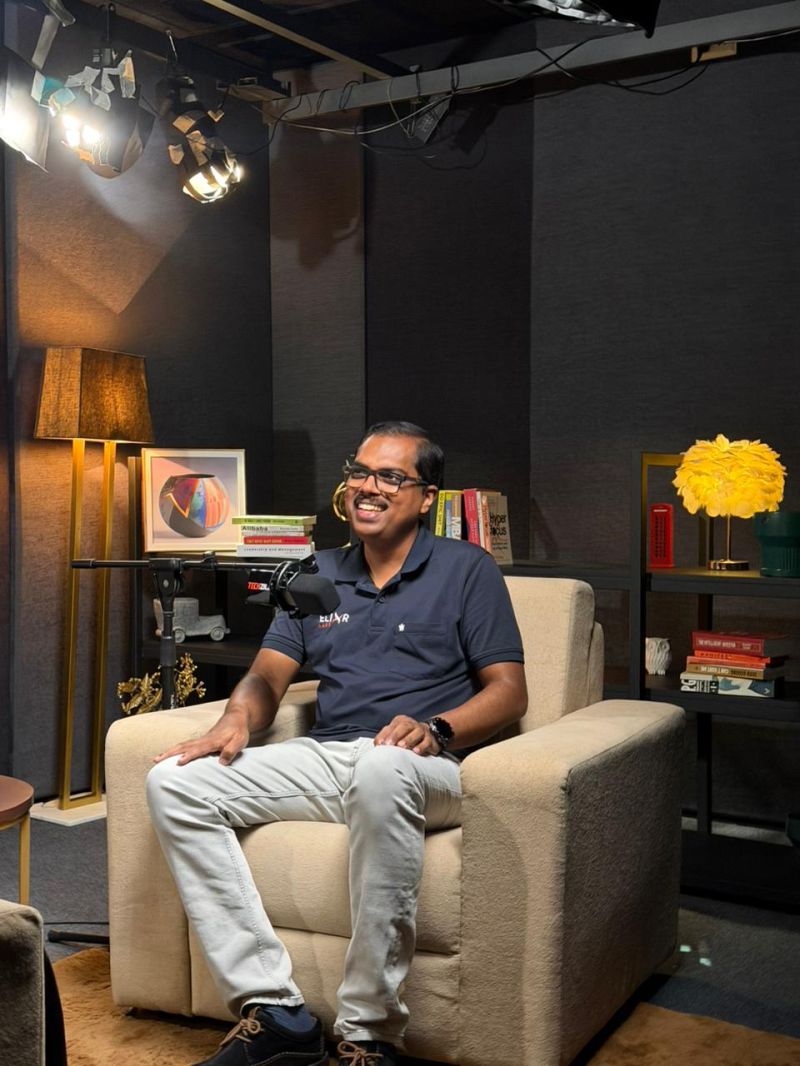
Running a podcast is exciting. You get to meet fascinating people, hear stories and have conversations that leave both you and your audience with something valuable to think about. Every guest brings a different perspective, and every episode teaches something new. But if you have ever produced a podcast, you know the recording is only half the work.
We have been running our podcast Techzila, for almost a year. During this time, we have had more than 15 guests, each bringing unique perspectives and conversations that have made every episode special. Despite having a great team and an efficient production setup, we kept running into a problem with reviewing the footage. That challenge led us to rethink our entire workflow, and I told my team to "break up" their work. It completely changed the way we produce our podcast.
The Hidden Challenge Behind Every Podcast
Most people imagine podcast production as setting up cameras, recording conversations, editing clips, uploading videos and publishing them. A typical podcast recording lasts between 90 minutes and two hours. Once filming is complete, the real work begins. Editors review every second of footage, remove unnecessary pauses, clean up mistakes, organize conversations and prepare the content for publishing. Then comes another important stage.
Someone has to proofread and review the edited version to make sure everything flows naturally, timestamps are correct and no important moments are missed. Now imagine opening a two-hour video file and knowing you have to review the entire thing before moving on to anything else. Even if you are disciplined, it feels overwhelming. Our brains naturally resist tasks that appear too large. When the finish line is not visible, getting started becomes difficult.
Looking at the Problem Differently
If revisions were needed, multiple people had to revisit a huge project all over again. So, we redesigned the workflow.
The "Break Up" System:
The idea was simple. The team does not have to review two hours in a single stretch. They could review fifteen minutes each of an episode. Our new workflow looked like this:
- The editor completes only the first 15 minutes.
- That section is immediately sent to the podcast manager.
- The manager reviews only those 15 minutes.
- Once approved, the editor continues with the next segment.
Instead of treating one episode as a single giant project, we turned it into a series of small, manageable ones. Nothing about the actual work changed, only the way we approached it changed.
Why This Small Change Worked
At first glance, reviewing fifteen minutes instead of two hours does not seem like something revolutionary. But the difference in productivity is huge.
1. Starting again after a break feels easier:
The hardest part of almost any task is not doing it. It's starting. Two hours feels intimidating while fifteen minutes feels manageable. Anyone can convince themselves to review fifteen minutes. Once they begin, continuing feels natural. That's why so many productivity experts recommend lowering the barrier to entry instead of increasing motivation.
2. Momentum stays consistent:
Every completed segment here creates visible progress. Instead of waiting hours to feel get the review to continue, the team gets to work without delay throughout the project. It is a win to the team, and those wins keep motivation high.
3. Feedback Arrives Faster:
This became one of the biggest improvements. Previously, if subtitles were inconsistent or pacing needed adjustment, we discovered those issues only after the editor had already finished the entire episode. And now feedback comes within minutes. If something needs changing, it's corrected before the editor continues.
4. Mental Fatigue Reduces:
No matter how experienced someone is, concentration declines over time. Watching two hours of footage continuously isn't just time-consuming. It's mentally exhausting. The more tired someone becomes, the easier it is to overlook subtle mistakes. Breaking reviews into shorter sessions gives reviewers fresh eyes and more attention. The better focus gained gives the project better quality.
A Lesson That Applies Almost Everywhere
The biggest realization was not about podcast production. It was about work itself. Almost every overwhelming project can be redesigned. Writing a book? Don't think about 300 pages. Write one page. Studying for exams? Master one chapter. Cleaning your workspace? Start with one drawer.
You don’t have to constantly push yourself to work faster. You must think about making your work easier. And in an organization, if your team repeatedly struggles with the same process, it is not always a people problem. Sometimes it's a systems problem. Systems always beat motivation.
Motivation is unpredictable because some days people feel energetic and on other days, they don't. If a workflow depends entirely on motivation, performance becomes inconsistent. Strong systems remove that dependency. They make progress possible even on average days. That's exactly what happened with our podcast production. Nobody suddenly became more hardworking overnight. The system simply made the work feel lighter and when work feels lighter, people naturally do more of it.
Our podcast has featured incredible conversations over the past year, but one of the most valuable lessons came from behind the scenes. Changing our workflow from one large review session to multiple smaller reviews didn't just improve efficiency. It improved the team's experience.
What are your thoughts on the redesigned workflow?


Why Losing Sleep Over Decisions is a False Measure of Seriousness in Leadership

Are We Using AI to Think Better or Slowly Letting it Think for Us? Understanding the Human Role in the Age of AI

Career Growth vs Employee Loyalty: Why Retention Without Growth is a Leadership Problem