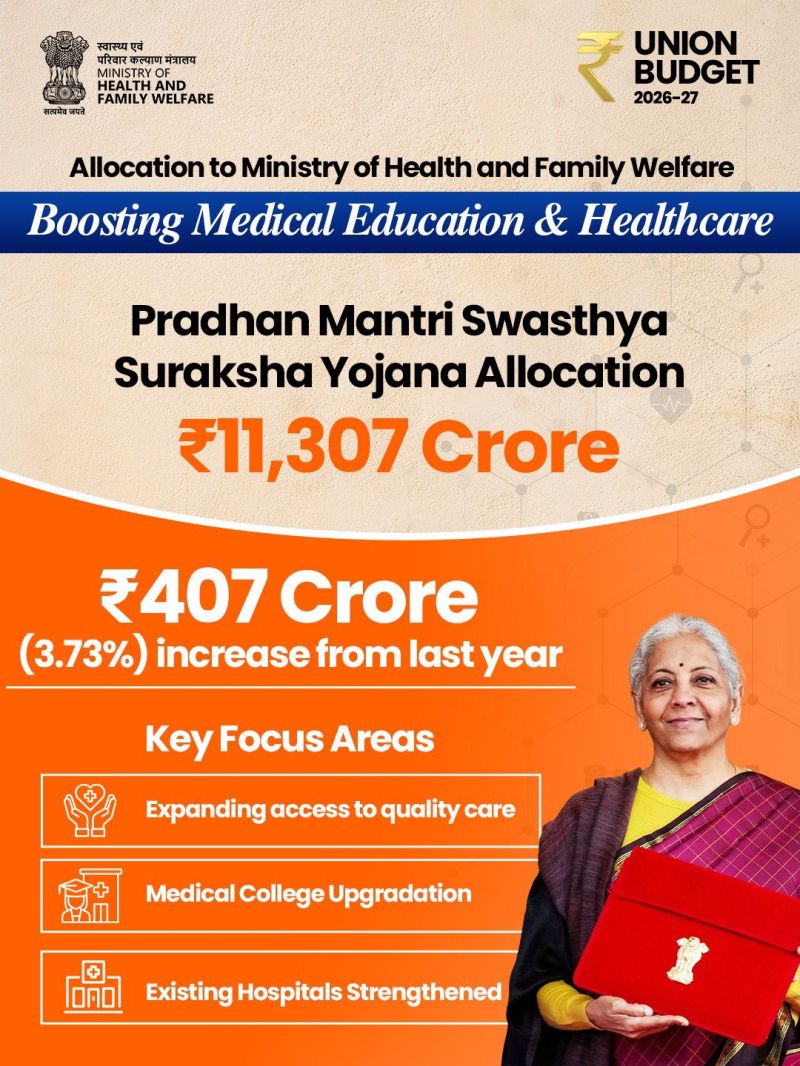
India’s latest Union Budget marks a powerful shift in how healthcare is funded and evaluated. For founders, operators and innovators in the modern healthcare system, this is more than just policy. It tells us where the system is heading, what will be supported, and what kind of solutions will matter in the coming years.
AI in Healthcare
AI has been a popular term in healthcare for years. It has appeared in pitch decks, investor conversations and product roadmaps. But until now, it often felt like a nice to have thing rather than a must have. This budget changes that.
With clear government support for early disease detection, preventive care and intelligent screening systems, AI is becoming a foundational layer of modern healthcare.
It also enables more personalized care. Treatment plans can be made specifically to individual patients based on their medical history, lifestyle and risk factors. This improves outcomes while also reducing unnecessary costs.
There is also a responsibility that comes with this shift. AI in healthcare must be accurate, ethical and clinically validated. It should be about building trustworthy systems that doctors and patients can rely on.
A Focus on The Aging Population
One of the most impactful moves in this budget is the increased attention given to senior citizens, especially with expanded insurance coverage for individuals aged 70 and above.
Older adults require care and support that is consistent, accessible and easy to use. With more seniors now covered by insurance, demand for specialized services will rise higher.
For founders and healthcare providers, this means designing services that are not only clinically effective but also accessible and user-friendly for seniors. Technology for seniors cannot be complicated. Interfaces must be simple. Devices must be easy to use.
MedTech Manufacturing in India
India’s MedTech sector has always had strong potential, but it has also faced many challenges like high dependency on imports, complicated tax structures and fragmented supply chains. This budget addresses those challenges.
By reducing the cost of importing parts and simplifying taxes, the government is making it easier to manufacture medical devices within India. This could lower production costs and improve competitiveness both domestically and globally. This opens up opportunities in areas like:
- Diagnostic equipment
- Wearable health devices
- Surgical tools
- Monitoring systems
For startups, this is a chance to enter into deep-tech innovation and for existing manufacturers, it is an opportunity to scale faster and compete globally.
Strengthening Cybersecurity in Healthcare
As healthcare becomes more digital, data becomes more valuable and more vulnerable as it includes personal information, medical history, diagnostic records and more. This budget’s emphasis on stricter cybersecurity norms is much needed one.
Stronger cybersecurity measures will have multiple positive effects like:
- Trust Building: Trust is the foundation of digital healthcare adoption. Patients are more likely to use digital health platforms when they feel their data is safe.
- Aligning with Global Standards: Strong data governance frameworks brings India closer to global standards.
- Operational Stability: Cyberattacks can disrupt hospital systems, delay treatments and affect patient care. Strong security reduces these risks and protects institutional reputation.
The Shift of Mindset from Planning to Execution
The most encouraging aspect of this budget is its tone. For years, India’s healthcare vision has been ambitious, but execution has often been inconsistent. Now with the budget, there is a stronger focus on practical outcomes and real-world challenges.
With these changes, several clear opportunity areas are emerging:
Preventive Health Platforms
Solutions that focus on early detection, risk assessment and lifestyle management will see growing demand. This shift from treatment to prevention is one of the biggest structural changes in healthcare.
Elder Care Technologies
There has been a gap in solutions designed specifically for seniors. Now, products that combine simplicity, accessibility and effectiveness will stand out.
- AI-Driven Diagnostics
Clinically validated AI tools that integrate into existing hospital workflows is really valuable as it can improve speed and accuracy in diagnosis.
- MedTech Manufacturing
Startups that can make use of improved cost structures to build and scale manufacturing units can create long-term competitive advantages.
- Health Data Security Solutions
As regulations become stricter, the need for healthcare cybersecurity solutions will grow more.
This shift demands a new kind of thinking. It requires health tech founders to move beyond traditional models, embrace technology responsibly and design solutions that genuinely improve lives.
What are your thoughts on the current budget?

The Ultimate Team-Building Activity That Delivers Results

What Could Be The Secret Job Description of Every Great Leader?

The Roads I Have Traveled: From A Small-Town Introvert to Global Tech Leader