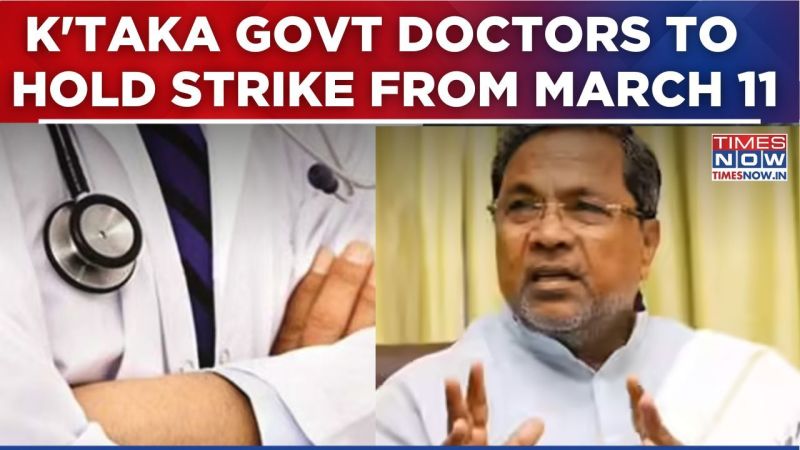
Beginning March 11, state medical officers announced a phased strike that will affect Outpatient Department (OPD) services in government hospitals. For many people, the immediate reaction may be frustration. Patients who rely on public healthcare facilities are worried about delayed consultations and treatments.
But before making this situation a headline about “doctors refusing to work,” it is necessary to understand the deeper aspect behind the protest. This strike did not come overnight. It is the result of years of neglect and silence.
Why Doctors Are Protesting
While patient suffering must never be dismissed, limiting conversations around the strike will later result in other crisis in hospitals. Doctors are only asking for the basic structural conditions required for a healthcare system and addressing the challenges they see in hospitals.
Irregular Supply of Essential Medicines:
One of the most serious issues raised by the medical officers is the irregular supply of essential medicines. This problem affects not only doctors but also affects patients directly. Even when a doctor diagnoses a patient correctly, prescribes the required treatment, the doctor becomes the face of a failure they did not create when the patient does not get medicines from the hospital pharmacy.
Patients then naturally direct their anger toward healthcare workers because they are the visible representatives of the system.
Without adequate medicine supply treatment becomes slower, poor patients are forced to buy expensive medicines privately, emergency care gets affected and public trust in hospitals decreases.
Recruitment Rules Frozen in the Past:
Another major concern raised by medical officers is that cadre and recruitment rules have reportedly not been updated since 1973. This is shocking because healthcare itself has transformed over the years. Modern medicine today has digital healthcare systems and still doctors are operating under administrative structures designed for an entirely different era.
Outdated recruitment rules causes staff shortages, unequal work distribution and decline in the healthcare quality. Healthcare systems cannot function well if they are using policies which are frozen in time while society continues to develop.
- Delayed Promotions for Nearly 5 Years:
Career progression matters in every profession. Doctors spend years in education, training, internships and service. The delayed promotions affect their financial stability, professional recognition, motivation to continue in public service and job satisfaction. And in healthcare, when burnout happens to a doctor, it is not merely a personal issue. It also affects the patients.
The Emotional Burden Doctors Carry
Conversations about healthcare we hear about mostly focus on doctors as professionals and rarely as human beings. Doctors are expected to remain calm during emergencies and resilient under pressure. During health crises, they are seen and celebrated as heroes. But once the crisis is over, the support disappears. Their routine goes like this:
- Long working hours
- Sleep deprivation
- Administrative pressure
- Staff shortages
- Constant overcrowding
These remain as an expectation that doctors should continue working silently regardless of the conditions they face. Here, exhaustion becomes very much normalized.
The healthcare system is only successful because many doctors continue working beyond their physical and emotional limits. But no system supports them and the exhaustion becomes protest, and protest becomes strike.
The once called heroes cannot replace:
- Administration
- Adequate staffing
- Timely salaries and promotions
- Mental health support
- Reliable infrastructure
A proper healthcare system should protect both patients and providers.
The People Holding Healthcare Together
Healthcare systems are built on the dedication of doctors, nurses and hospital staff who continue working despite the increasing pressure. In many hospitals, especially government institutions, healthcare workers have to manage patient loads, long working hours, limited resources and emotionally draining situations without pause every single day. Even under these difficult circumstances, they continue to work because they see healthcare as not just a profession but a responsibility that directly impacts human lives. This is exactly why doctors’ strike is not just about employee dissatisfaction. They are warning signals coming from the people holding the healthcare structure together. When those working inside the system begin to speak openly about exhaustion and lack of support, it shows the cracks within the healthcare infrastructure itself.
If they feel unheard for too long, the system itself eventually begins to break. And the most concerning question is not why doctors are protesting today, but why it took this long for the warning signs to receive attention at all.


What 2025 Taught Me About Leadership and How Our Team Is Changing in 2026
How Our Podcast Techzila is Shaping Meaningful Tech Conversations
How Companion Apps Improve Results for GLP-1 Medications in Healthcare