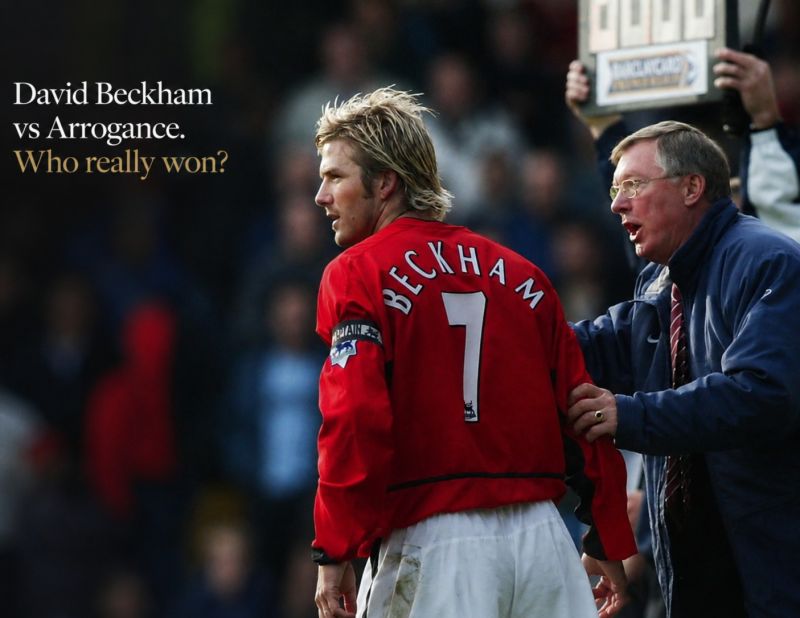
"Talent wins matches. Character builds teams."
There was a time when I believed one thing about building great teams. I used to think that if someone gets great results, nothing else should matter. Then I started working with teams and realized that sometimes the most talented person in the room can also become the hardest person to work with. Whenever I think about this, one story comes to mind. David Beckham's departure from Manchester United. On the surface, it was the transfer of one of the world's biggest football stars. But beneath it was a lesson about leadership, accountability, team culture and one of the hardest decisions a leader can make. When extraordinary talent begins pulling in a different direction from the team's purpose, what should a leader protect?
The answer to that question extends far beyond football. It applies to every startup, every growing company, and every organisation trying to build a team that succeeds in future years.
When Success Creates New Challenges
In the late 1990s and early 2000s, David Beckham was not just one of the best footballers in the world. He was a global phenomenon. Under Sir Alex Ferguson, Manchester United became one of the most dominant football clubs in history.
As Beckham's popularity grew beyond football, so did the attention around his personal life. At the same time, Sir Alex Ferguson believed that football should always come first. Over time, differences in priorities created tension between them.
In 2003, David Beckham transferred to Real Madrid. Why would one of the world's biggest football clubs allow one of its biggest stars to leave? The answer was not about ability. It was about protecting the long-term health of the team.
It's easy to assume this story is only about sports. It isn't. Most growing companies face a similar challenge. There comes a point where leaders must decide whether exceptional performance alone is enough. Imagine having someone who consistently delivers incredible work but does not collaborate with the team. One person's brilliance slowly becomes everyone else's challenge.
Why Team Culture Matters More Than Individual Brilliance
One misunderstanding may lead to another and trust begins to fade. That's exactly what happened between Beckham and Ferguson. The relationship had reached a breaking point. Once trust disappears, even success struggles to hold people together. Imagine being responsible for one of the world's best football teams. You have a player who is still producing results. Do you keep him because he's valuable? Or do you let him go because the relationship no longer works? Ferguson chose something many leaders struggle to choose. He prioritized the team over the individual. In 2003, David Beckham left Manchester United and joined Real Madrid.
The most interesting part of this story happened years later. David Beckham reflected on his time under Sir Alex Ferguson with greater maturity. He acknowledged that Ferguson was not completely wrong. As he gained more experience, Beckham understood why his manager had been concerned. That realization says something powerful. Perspective changes with time. When we are in the middle of conflict, we see only our side. Later, distance gives us clarity. We have all experienced this with a difficult teacher or a strict manager.
Years later, we sometimes realize that they were trying to teach lessons we could not appreciate at the time. It does not mean every leader is right. It means growth requires looking back honestly.
The Best Leaders Protect Culture
Football and business are different industries. But teams operate in a similar way. The moment one person becomes bigger than the team's purpose, problems begin.
Earlier in my career building the healthtech company, I believed results were everything. Working with teams changed that belief completely. As our company grew, I realised that technical ability is only one part of what makes a great team. That is why, today, I pay close attention not only to what people can do but also to how they make others feel while doing it. I would rather build a team of highly capable people who support one another than depend on one extraordinary individual who weakens the culture around them.
Whether you are building your first startup, leading a growing company, or building your first team, the question remains the same. When talent and team culture pull in different directions, which one would you protect? Because in the long run, talent may win matches, but culture builds teams.
What do you think matters more in the long run?


Real Estate Secrets: How I Grew My Wealth Without Selling Anything!

How I Stopped Overthinking and Started Making Bold Decisions

No More Barriers: Building a Healthcare System That Truly Cares