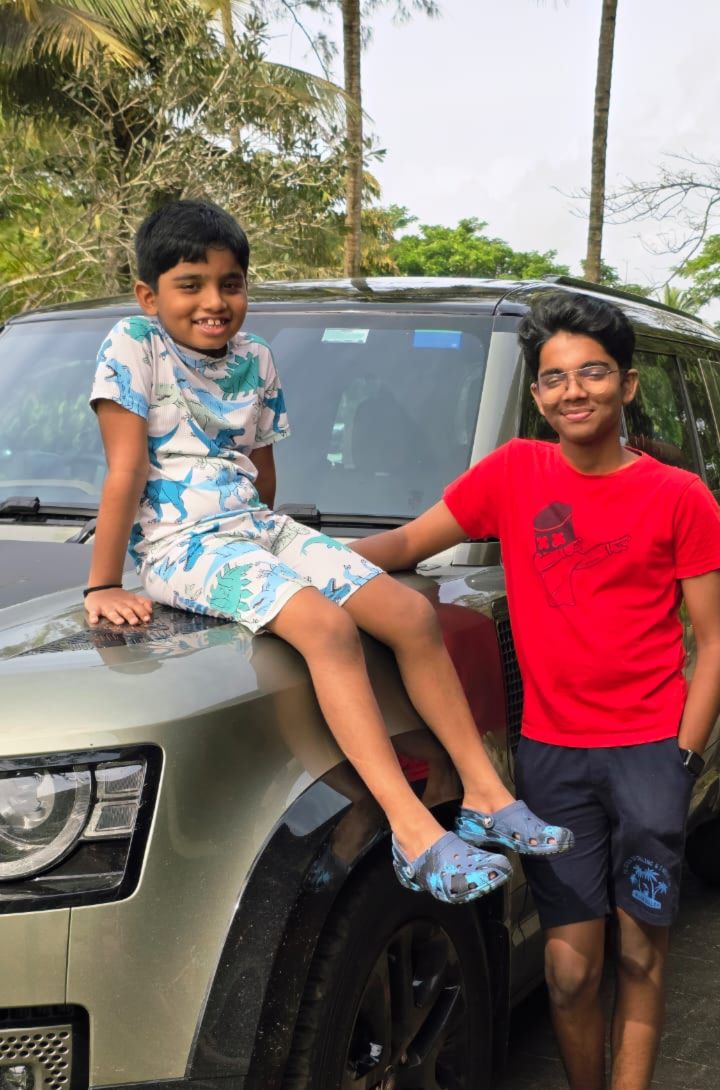
I have two sons. They were born into the same home, raised by the same parents, surrounded by the same values. Yet, they belong to entirely different worlds.
My elder son, born before 2010, grew up in a familiar rhythm of childhood where learning flowed from teachers, parents and television. Cartoons were his first heroes, and even today, his interests feel like a natural progression as he moved from cartoons to X-Men, from simple narratives to complex superheroes. Meanwhile, my younger son, born after 2010, is different.
He stopped watching cartoons two years ago. Instead, he watches vlogs, creators and real people from different countries, cultures and backgrounds. He picks up accents. He learns slang. He absorbs different cultural perspectives effortlessly. He knows about the trends, tools and ideas that my elder son had never encountered at the same age.
And that is when it hit me- the generation gap is no longer 30 years, it is barely 10. This is not just a parenting observation. It’s a leadership wake-up call.
A World That No Longer Evolves Gradually
For the past years, the tools evolved slowly, the knowledge was centralized and as we know the authority came from institutions- schools, corporations, governments.
But that world is gone now.
Today, children born just a few years apart grow up in a different environment. The difference between someone born in 2005 and someone born in 2015 is not just age, there is the difference in the exposure. One grew up with textbooks and Google while the other grew up with YouTube and from creators, algorithms and communities. What once took decades now happens in years.
And yet, many leaders are still operating as if nothing has changed.
The younger generation is not waiting to be taught. They are self-directed learners and they do not need permission to explore. They do not rely solely on teachers, managers or trainers to acquire knowledge. With a smartphone and internet access, they can:
- Learn new languages
- Understand global cultures
- Master software tools
- Build personal brands
- Earn money
- Form opinions
Meanwhile, many organizations still rely on the outdated training modules, rigid hierarchies, annual performance reviews and one-way communication.
When leaders move slowly but the next generation moves at internet speed, disengagement is pretty inevitable.
A Lesson for Founders
Let’s be honest: the leadership styles that worked even five years ago are struggling today. Why? Because younger generations question authority instead of accepting it blindly. They value authenticity over the glamorous titles, expect transparency and not control. A leader who relies solely on experience without adaptability risks becoming irrelevant fast.
The story of my two sons is not unique. It is a mirror to what is happening in workplaces across the world. Founders and leaders often assume that culture, values and their systems are static. But the people entering organizations today are shaped by entirely different realities than those who entered just a decade ago. So, what has worked for your first 50 employees may fail with your next 50 and what motivated your early team may not resonate with Gen Z or Gen Alpha joiners. If you are not able to adapt to changes, then it is a failure of the outdated leadership frameworks.
And one of the most careless assumptions that leaders often make is: “They will adjust eventually.”
The truth is that they would not. The younger generation does not see organizations as their lifelong destinations. If they feel like the leadership is disconnected, they move on quickly.
What Modern Leadership Actually Requires
To lead a generation that learns faster than you, you must shift from being the source of knowledge to the role of facilitator of growth. It means:
- From Authority to Credibility: Respect is no longer thought to be automatic. Earlier, a designation or senior position was enough for people to listen and follow. But now, it has changed and respect has to be earned.
- From Control to Collaboration: The idea of micromanagement actually kills creativity. Younger generation teams look for a space which trusts autonomy and also encourages experimentation.
- From Experience to Adaptability: Experience always matters but they only matter the most when they are paired with openness to new tools, platforms and perspectives.
- From Teaching to Learning Together: Leaders must be willing to learn from their teams, not just teach them.
You do not need to be on every platform, but you must understand how digital culture influences and moulds thoughts, attention and behaviour.
The lines between learning, working and leading are blurring day by day. You get to see that your employees are learning while working, your children are working while learning and your teams can be found involved in peer learning rather than formal structures.
One thing every founder has to keep in mind is that leadership today is less about instruction and more about creating environments where learning never stops.
Keeping Up Is a Choice
The speed of change is not slowing down. Five years from now, today’s leaders may find themselves managing teams that they barely recognize in terms of work culture and individual perspectives.
The right leadership is not about staying ahead of people but staying aligned with the world we live in.
The next generation is already moving at internet speed. The question is not whether the world will keep changing because we know it will, so the real question is are we willing to evolve with it?

Why Number 3 Works for Me in Life and Business
The One Question Every Client Asks About Healthtech Security
Why Edible Sensors Could Be a Game-Changer for Healthcare