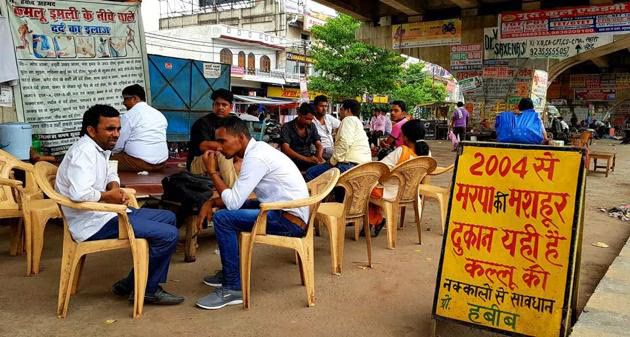
An aunt who lived near my house used to cure everything and has helped hundreds of people. But she was not a licensed doctor. There was a hand painted board which said, “Guaranteed Cure in 30 days!”
Every morning, a line formed outside her door. Many elders, parents and people who could not afford treatments from hospitals line up there. Families arrived clutching hope as tightly as their wallets. All they could afford was to believe in miracles. What made this situation more than a simple scam was the psychology behind it. The people who sought her help were not naive. They were desperate.
Those people who visited her were the ones who struggled to discuss openly: mental health challenges, developmental delays, chronic pain and skin disorders. These issues carry stigma in many communities and thus silence becomes a coping mechanism. Unlicensed practitioners exploit that vulnerability. They sell unlabelled powders and pills, claiming that they are ancient secret formulas or natural cures passed down through generations. While they may contain herbal ingredients, investigations in many such cases have revealed that they were combined with trace drugs to produce short‑term effects. These effects can mimic improvement for some time, just long enough to sustain belief. To cover up and make people believe it, they offer a written guarantee “Full refund if not cured in 30 days,” They create an illusion of accountability. When treatment fails, families often remain silent as admitting they were deceived also means acknowledging that something is wrong within the family. It is also a stigma that many are unwilling to confront publicly.
The Hidden Costs to Families
The financial consequences of these scams is very upsetting. In my town, families pawned jewellery, borrowed money and even skipped proper medical treatment in pursuit of a promised cure that actually never existed. They are not aware that each month spent chasing it was a month without proper care. For chronic or progressive conditions, these delays worsen their condition.
Beyond finances, there is an emotional consequence as well. When the cures fail, families often blame themselves. They feel guilt for not trying hard enough or shame for having believed in the first place.
The broader community gets affected too. When these treatments circulate widely, they harm the trust in real healthcare systems. The stories of miraculous recoveries overshadow the hospitals and clinics.
The Digital Evolution of the Older Scams
The hand‑painted boards have decreased but the scams have not disappeared completely. They have evolved with time. Today’s miracle cures travel through Instagram reels, WhatsApp forwards and websites.
A video viewed thousands of times creates an illusion of credibility. For people who have already been sceptical of formal healthcare or struggles to access it, these online messages become really persuasive.
The anonymity of the internet is advantageous to the scammers. Sellers can disappear and reappear under new names. As a result, we could see that vulnerable groups of people remain exposed to the same psychological tactics that operated in small neighbourhoods decades ago.
Why People Continue to Believe
Understanding why these scams still run smoothly is necessary. Their belief in miracle cures reflects the gaps in healthcare accessibility, affordability and communication. When people feel dismissed or judged by medical professionals, they start to look for alternatives.
Cultural traditions also play a role. Many communities have long histories of herbal medicine and local healing practices. These traditions are brought together with modern medicine. This becomes a problem when it exploits cultural trust for profit, selling untested products as guaranteed solutions.
Psychologically, humans are wired to seek hope. In situations involving illness particularly chronic conditions, the patient will trust testimonials from neighbours or online strangers more than the clinical data.
A Shared Responsibility
The story of this neighbourhood healer is not just about one individual or one community. It reflects a broader pattern in which desperation becomes a marketplace. Whenever healthcare systems fail to meet people where they are, opportunists step in to fill the gap.
Addressing this issue requires more than simply condemning fraudulent practitioners. Communities need accessible and affordable healthcare options. This requires collective effort and communities must support open conversations about illness without shame.
Digital literacy is equally important. The posters may be gone, replaced by digital screens and viral videos, but the human story that lies beneath it remains unchanged. Teaching people how to evaluate online health extends to checking sources, recognizing red flags and understanding the limits of the testimonials, and this helps to reduce being victims to modern versions of the scam.
Have you or someone you know encountered a situation like this? Sharing experiences and information about this can help communities recognize the warning signs and support one another for safer, effective care.


How 15-Minute Cities Are Driving the Next Real Estate Boom

Why Hospitals Need a Digital Makeover—Now More Than Ever

Leadership Done Right: Giving Your Team the Space to Grow in Their Careers