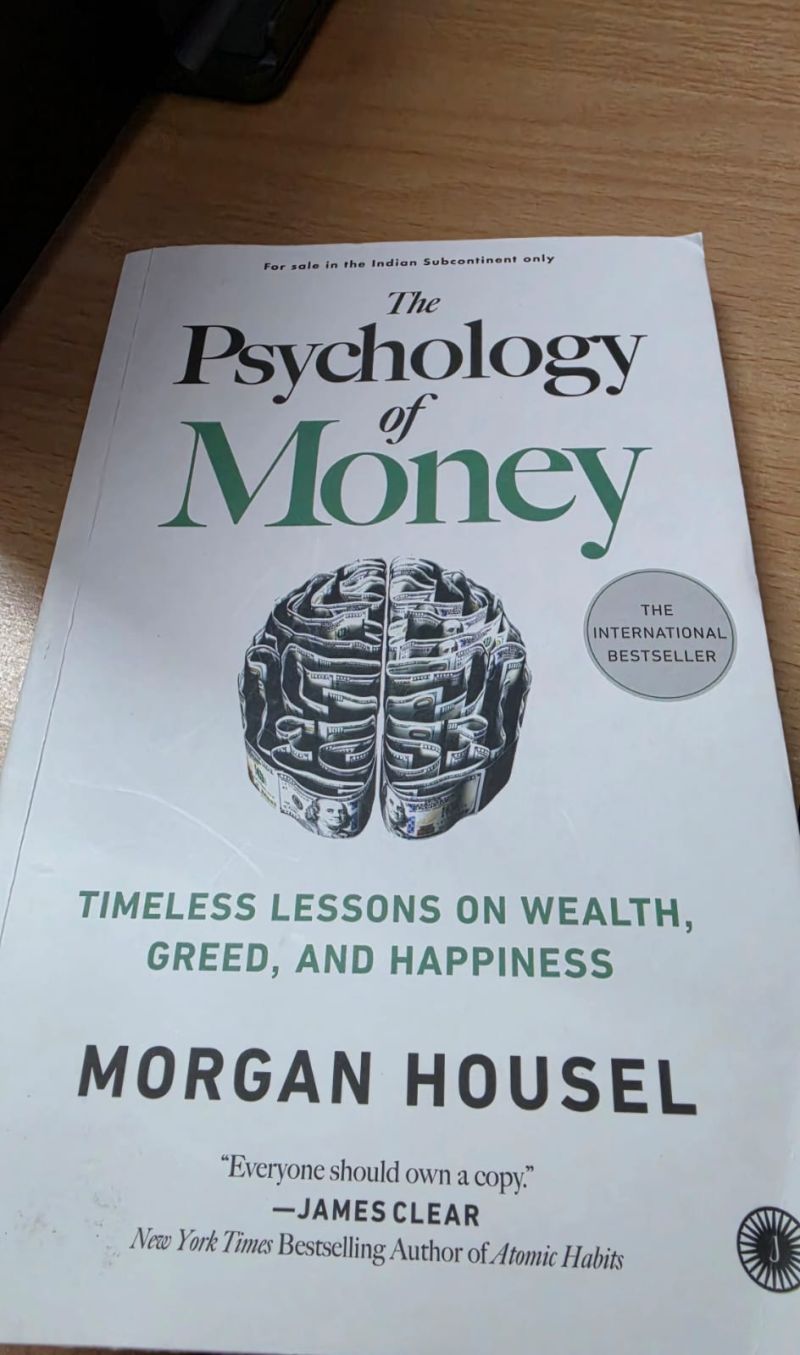
People assume that building wealth is a matter of intelligence. We admire successful business leaders and conclude that they must possess exceptional financial knowledge. We believe they understand markets better, identify opportunities faster, or simply know something the rest of us do not.
After reading The Psychology of Money by Morgan Housel, I walked away with a very different perspective. The most valuable lesson in the book has little to do with investment strategies, market predictions or financial models. Instead, it highlighted the truth that money is not a math problem, it is a behaviour problem.
No matter how intelligent we are, our financial decisions are mostly shaped by emotions other than logic. Fear, impatience, ego, and overconfidence quietly influence the choices we make. Whether we are managing personal finances or leading a business, our behaviour determines our financial future more than our knowledge ever will. As a HealthTech founder, this idea resonates deeply with me. Building a company requires constant decision-making under uncertainty. Markets fluctuate, opportunities come and go, and challenges appear without warning, and in those moments, technical expertise alone is not enough.
Wealth is Invisible
Expensive cars, luxury homes, designer items and lavish lifestyles are mistaken as proof of financial achievement. Social media has only amplified this perception, encouraging people to measure success by what they can see. True wealth is the money that remains invested. It is the savings that continue to grow quietly in the background. It is the decision to delay gratification today so that future opportunities become possible tomorrow.
The car you chose not to upgrade, the expensive purchase you decided to postpone, and the income you invested instead of spending, these decisions may never receive attention, but they are the foundation of lasting financial security.
The same principle applies to entrepreneurship. Many founders feel pressured to appear successful long before their businesses are financially stable. They invest heavily in impressive offices, unnecessary expansion, or lifestyle upgrades that create the illusion of success while quietly reducing financial flexibility.
Sustainable businesses are built by spending more than necessary. They are built by protecting resources, making thoughtful decisions, and understanding that long-term stability matters far more than short-term appearances.
Consistency Outperforms Intelligence
Saving regularly, investing patiently, avoiding unnecessary debt, controlling expenses and making thoughtful financial choices may not seem exciting. These habits create extraordinary results over time. The same lesson applies to building a business.
Successful companies are not just the result of one groundbreaking decision. Instead, they grow because founders consistently solve problems, improve products, listen to customers, and make disciplined choices day after day.
Consistency is not something dramatic, but it is absolutely powerful. Intelligence can create opportunities for your business, but consistency is what turns those opportunities into long-term success.
Compounding Rewards Patience
One of the greatest misconceptions about investing is the belief that success depends on finding the perfect moment to begin. People constantly ask their peers or guides when they should invest, launch a business, expand operations or enter a new market. Unfortunately, the search for perfect timing leads to hesitation and missed opportunities.
Compounding does not ask for perfection. It demands patience. Whether it is money, knowledge, relationships, or business growth, small efforts sustained over long periods create great outcomes. The earlier positive habits begin, the greater is their long-term impact.
As someone leading in the health tech industry, I find this principle particularly relevant in healthcare. Preventive care consistently produces better outcomes than delayed intervention. Financial health follows the same pattern. Small, disciplined actions taken consistently over decades usually outperform dramatic decisions made too late.
Saving Over Optimising
Modern financial conversations mostly focus on optimisation. People discuss better investments, higher returns, tax strategies, and portfolio performance. While these topics are important, they all depend on one simple foundation. You cannot optimize money that you never saved. Saving creates opportunities that spending cannot. It provides security during uncertain times, flexibility when unexpected challenges arise, and confidence to pursue meaningful opportunities without constant financial pressure.
For entrepreneurs, this lesson extends beyond personal finances. Businesses also require financial reserves. Cash flow determines survival. Many promising startups fail not because their ideas lack potential but because they run out of financial runway before achieving sustainable growth. Saving is not simply about accumulating money. It is about creating options.
Lifestyle Inflation Slows Financial Growth
As income grows, spending grows alongside it. Larger homes replace smaller ones, and better cars replace practical ones. Premium services, luxury purchases and everyday conveniences gradually become normal expectations.
The problem is not occasional rewards for hard work. The problem begins when increasing income no longer creates increasing freedom because every additional rupee is immediately absorbed by a more expensive lifestyle. Businesses experience a similar pattern. As revenue increases, operating expenses expand just as quickly. Larger offices, unnecessary hiring, and higher fixed costs can reduce financial stability despite of the growing sales. Growth alone does not create wealth. Growth combined with financial discipline does.
Freedom Over Status
Society encourages people to chase status. Recognition, luxury, prestigious titles and public admiration are presented as measures of success. None of these guarantee peace of mind. True wealth creates something much more valuable than status. It creates freedom. The freedom to say no to opportunities that do not align with your values. The freedom to make decisions without constant financial anxiety. The freedom to pursue long-term goals without being controlled by immediate financial pressures.
For founders, freedom is a greater achievement than recognition. Building a business should create choices and not simply larger responsibilities.
Survival Comes Before Growth
We admire businesses that scale quickly and achieve impressive value in a short period. But long-term success depends on something much simpler, i.e. survival.
Businesses can only benefit from compounding if they remain in operation long enough for it to work. The same principle applies to personal finance. Emergency funds, insurance, careful budgeting and financial planning protect the foundation that allows future growth to happen.
Protect and survive first, then grow second.
Define What "Enough" Means
Let’s see the importance of defining what "enough" means.
Modern society constantly encourages comparison. There will always be someone earning more, building faster, raising larger investments, or living a more luxurious lifestyle. Without a personal definition of success, the finish line continually moves further away. Achievement becomes temporary and satisfaction becomes impossible.
Ambition is important, especially for entrepreneurs. It drives innovation, growth, and progress. But this ambition without any boundaries leads to exhaustion and not fulfilment. You need to define what you think is enough.
Knowing what is truly enough creates clarity. It allows us to pursue meaningful growth without becoming trapped in an endless cycle of comparison.
What Every Founder Should Remember
Building a business is one of the greatest tests of emotional discipline. Every founder experiences uncertainty, setbacks, unexpected opportunities and moments of doubt. Technical knowledge can solve many business problems, but emotional discipline determines how consistently that knowledge is applied.
This is especially true in healthtech, where innovation requires years of research, persistence, approvals, and continuous improvement before success arrives. Just like that, financial success is also created through countless small choices made consistently over time, the money you chose not to spend, the unnecessary risks you avoided, the patience you exercised when others chased quick rewards, and the discipline you maintained when emotions encouraged impulsive decisions.
Understanding money is important. But understanding ourselves is even more important.


How 15-Minute Cities Are Driving the Next Real Estate Boom

Why Hospitals Need a Digital Makeover—Now More Than Ever

Leadership Done Right: Giving Your Team the Space to Grow in Their Careers