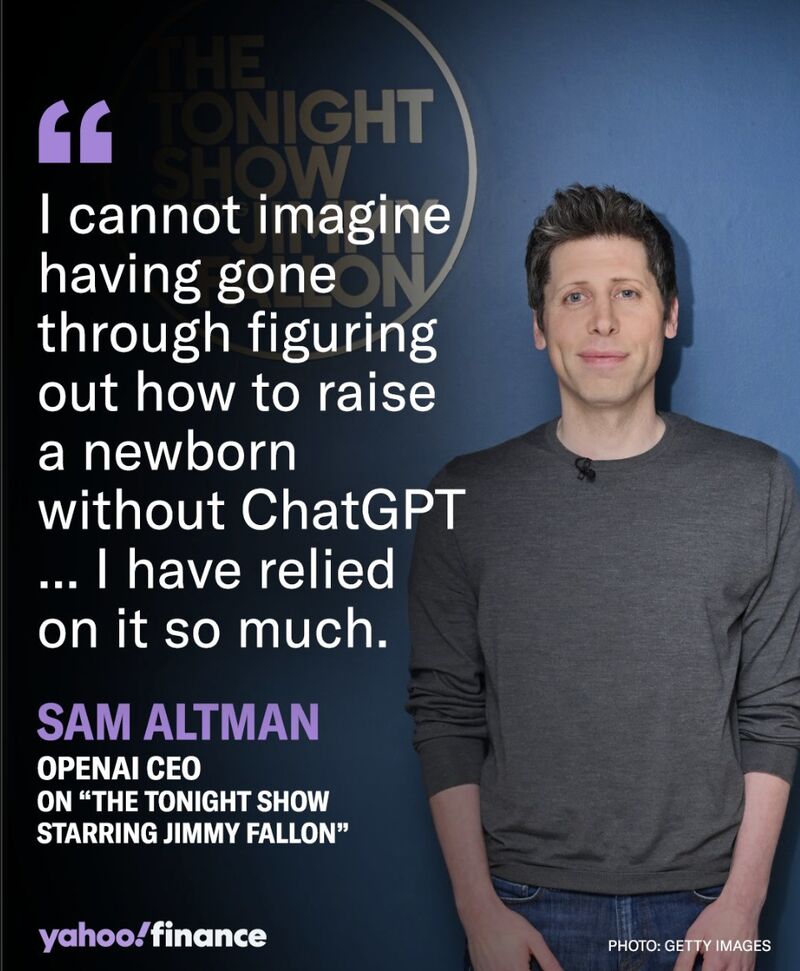
When Sam Altman, CEO of OpenAI, said that he could not imagine raising a child without ChatGPT, people panicked asking if we are replacing parenting with technology. But I agree with him.
If we step back and look at the bigger picture, this is not new. Technology has always shaped parenting. From television to smartphones, every generation had to adjust and find balance while television changed how children learned and spent time, the internet reshaped access to information and smartphones redefined communication.
AI is simply the next chapter. The difference is that this time, the tool does not just entertain, it assists us. It organizes, explains, translates and adapts. When it is used rightly, it can actually make parenting more thoughtful.
AI as a Parenting Support System
It is the time to strip away the panic and look at reality. Many parents today use AI in practical ways:
Planning their weekly schedules without chaos:
Family life is already busy. School schedules, work deadlines, activities, meals, social commitments, it all adds up quickly to mental overload to the parents. AI can help here by planning weekly schedules, suggesting meal ideas based on what’s available at home, reminding parents of important tasks, and even help them break down busy days into manageable ones. When parents are not overwhelmed by small decisions, they have more space to be present for their child. It helps them do things right while being emotionally available for them.
Explaining the World in Kid-Friendly Ways:
Children are naturally curious. They constantly ask questions at the most unexpected times. No parent has all the answers and even if they do, explaining it in a way a child understands is not easy. This is where AI becomes a helpful partner. AI helps them to turn complex ideas into simple age-appropriate explanations, adjusting the tone depending on the child’s age and encouraging curiosity. Instead of shutting down questions or giving rushed answers, parents can stay engaged in the conversation.
Staying Updated to Their Child’s World:
Children today grow up in a fast-moving cultural environment with new books, trends, shows and social behaviours appear and change constantly. What is popular today might be irrelevant next month. For many parents, this creates a gap. AI helps to bridge that gap. AI helps parents to understand what their children are reading or watching, decode trends and references and stay informed without feeling outpaced. It allows parents to remain part of their child’s world instead of feeling excluded from it.
Growing Alongside Their Children:
The world children are growing into is not the same as the one their parents grew up in. Technology, careers, communication and even social expectations are changing every day. With AI, parents can learn alongside their children exploring new ideas, understanding emerging technologies and staying informed about changes that might impact their child’s future. It turns parenting into a shared learning journey rather than a one-sided responsibility. And when children see their parents learning, adapting and growing, it also teaches them that growth never stops.
The Line That Should Never Be Crossed
While AI offers many benefits, there is a clear boundary that should not be ignored. AI can support parenting but it cannot or should not replace it. There are parts of parenting that no tool should take over:
- Teaching values
- Setting boundaries
- Making moral decisions
- Emotional complexity
- Having difficult conversations
AI can provide information, but it cannot provide judgment rooted in love, experience and responsibility. A child should learn it from watching how their parents live, respond and care.
The Conversation We Should Be Having
Much of the fear around AI comes from a valid concern that what if parents start relying on it too much? We have seen the same pattern before with television, smartphones and social media. The issue is not the tool itself, but how people choose to use it.
On the other hand, if AI is used effectively, it can help parents stay mentally present. When parents are less stressed about planning, remembering and organizing, they have more energy for what truly matters. Children may not remember perfectly planned schedules or detailed explanations but they will definitely remember how their parents made them feel.
So, instead of asking if AI is ruining parenting, we should be asking:
- Are we using it intentionally?
- Does it bring us closer to our children or pull us away?
- Are we still showing up emotionally?
These are the questions that matter because technology does not define parenting, people do. It is entirely possible and increasingly necessary to be both pro-technology and pro-human parenting.
How do you utilize AI in daily life?


Why Can't Most Leaders Build Influence? The Answer May Surprise You

Achieving Life Satisfaction: How I Found My Purpose in Healthcare

Beyond Paychecks: The Crucial Role of Appreciation in Employee Retention