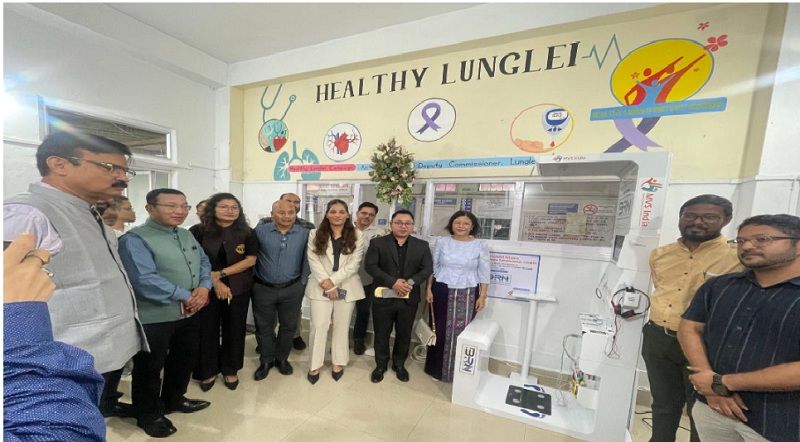
In rural Mizoram, getting a simple blood pressure test used to mean walking miles to the nearest clinic. For many, routine health checks were not just an inconvenience, they were nearly impossible. But something remarkable has changed in Lunglei district. Today, a villager can walk into a hospital lobby, press a button and walk out with 35 diagnostic results delivered straight to their phone and all free of cost. Mizoram has introduced its first-ever Health ATMs. These smart kiosks, installed at Civil Hospital Lunglei and PHC Lungsen, represent a quiet revolution in healthcare access, one powered by technology, community partnerships and the state’s commitment to public health.
The concept of a Health ATM may sound futuristic, but the technology is simple. Each kiosk is an IoT-powered diagnostic station equipped to perform 35 essential health tests including blood pressure, body mass index (BMI), ECG, blood sugar, oxygen saturation, temperature and even mental health screening. The entire process takes just a few minutes. A person walks up to the kiosk and registers using a simple touch interface and they go through the guided process to measure their vitals and perform tests. Within moments, their results are generated and automatically sent to their phone as a digital health record. What would typically require multiple hospital visits, lab appointments and doctor consultations is now available anytime, without queues, fees or any delays. The entire service is free, ensuring that financial constraints never come between people and basic healthcare.
The Power Behind the Transformation
What makes Mizoram’s model even more impressive is how it came together. The Healthy Lunglei Initiative is the result of collaboration between the Government of Mizoram providing institutional support, district administration ensuring implementation and corporate social responsibility (CSR) partners like MVS India, ABCI and BRN offering funding and operational expertise. Thus, each stakeholder played a key role. Together, they created a model that does not just install machines but integrates them into the healthcare delivery system with trained personnel, proper data handling and community trust.
This collaborative approach is what turns technology into a sustainable public health tool rather than a one-time experiment.
Why Health ATMs Matters
India’s healthcare challenge is not just about providing treatment it is about early detection. In many rural and semi-urban areas, people simply do not get diagnosed in time. Conditions like diabetes, hypertension, or anaemia often go unnoticed until they become life-threatening and the reasons are well-known:
- Long distances to healthcare facilities
- Shortage of medical professionals
- Cost barriers for diagnostic tests
- Lack of awareness about preventive health
Health ATMs directly address these challenges. They have made the diagnostics accessible, affordable and digital. By doing so, they have brought preventive healthcare to the doorstep of those who need it most. When people know their health status early, they can take timely and necessary steps like visiting doctors, managing lifestyle changes or getting further tests. That is how lives are saved quietly before the emergency occurs.
Mizoram’s initiative may be the first of its kind in the Northeast, but its potential reaches far beyond state borders. If a remote, hilly district like Lunglei can run smart health kiosks successfully, there is no reason why other rural parts of India cannot follow this.
Imagine health ATMs installed across primary health centres and community halls turning every village into a mini-diagnostic hub. With India’s growing digital infrastructure and cloud-based health records, this vision is not far-fetched, it is the next logical step. Health ATMs could serve as the first touchpoint in the health tech ecosystem capturing reliable health data and connecting patients with doctors and hospitals seamlessly.
Bridging the Gap Between Technology and Trust
Technology alone cannot transform healthcare. For any innovation to succeed in rural areas, people need to trust and adopt it. That is where the Healthy Lunglei Initiative stands out again. The kiosks are located in trusted public spaces like hospitals and primary health centres where people already go for medical needs. This ensures immediate acceptance and credibility. Moreover, by making the experience simple and guided, the initiative removes the fear of machines replacing doctors. Instead, it complements healthcare workers by freeing them from routine checks and letting them focus on patients who truly need clinical attention. When technology and human care work together, the result is a healthcare system that is faster, fairer and more personal.
That is not just convenience, it is the real empowerment.
Could Health ATMs Become as Common as Bank ATMs?
It is an exciting thought and not impossible. A decade ago, the idea of withdrawing money from a machine in a remote village seemed futuristic. Today, bank ATMs and digital wallets have made cash access universal. Healthcare could be on a similar path. With the right investment and policy push, Health ATMs could become as ubiquitous as bank ATMs offering not cash but something even more valuable: early diagnosis and peace of mind.
What are your thoughts on Health ATMs?

Why Collaboration Skills Matter More Than Individual Performance in Leadership and Team Building
AI and the Future of Jobs: How AI Changed the Rules of Career Growth
Why This Simple Hiring Test Has Become My Important Interview Tool for Hiring Process