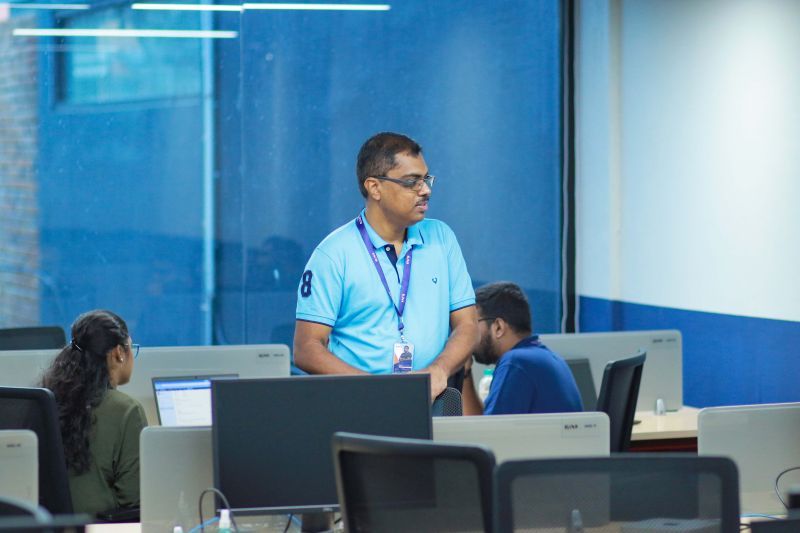
Two employees sit just a few desks apart. They have similar educational backgrounds, comparable years of experience, access to the same tools, the same manager and the same opportunities. Twelve months later, their careers look different.
One has become the person everyone turns to when problems become complex. They are leading initiatives, influencing decisions, earning the trust of seniors and taking on important responsibilities. The other is still doing the same work. Their career remains where it started. The difference is not intelligence or experience. The difference lies in how they choose to work and how effectively they use artificial intelligence.
The Shift Inside Every Organization
When people talk about AI, the conversation usually revolves around "Will AI replace jobs?" These are important questions, but they distract us from a much quieter transformation already taking place inside organizations. AI is not creating an overnight divide between companies. It is creating a divide gradually between people working in the same company.
Imagine two product managers joining a company at the same time. Both have similar experience and both have access to the same software and internal resources. For the first few weeks, there is almost no visible difference. Then small habits begin to emerge. One employee starts treating AI as a thinking partner rather than a shortcut. Before every meeting, they ask AI to summarize research and suggest discussion points. When working on a new feature, they use AI to brainstorm alternatives before presenting ideas to the team. When writing documentation, they create first drafts faster and spend more time improving strategy rather than formatting sentences. Instead of replacing their thinking, AI amplifies it. The second product manager continues working exactly as they always have. But over twelve months, those tiny differences accumulate. One employee begins solving larger problems because routine work consumes less of their time. The other remains busy completing routine work.
Internal Asymmetry is More Dangerous Than External Competition
Businesses spend enormous amounts of money studying competitors. But one of the biggest competitive threats develops inside the organization itself as not everyone adopts new ways of working at the same pace. Some employees continuously experiment. Others wait until everyone else has already changed. This creates internal asymmetry. Two people with similar potential begin producing completely different levels of impact. Managers do not always notice immediately because both employees appear busy. But after some time, one becomes known for solving complex challenges. The other becomes known for executing assigned tasks. That's a difficult gap to close once it becomes visible.
The New Workplace Rewards Leverage
One common fear is that relying on AI will make people less creative. The reality is the opposite. The best professionals are not using AI to avoid thinking. They are using it to think better.
Before, productivity was measured by effort and today, it is increasingly measured by leverage. How effectively can one person create value? How quickly can someone move from an idea to execution? AI gives professionals leverage. It removes repetitive work that does not require unique human judgment. That allows people to spend more energy where humans create the greatest value like critical thinking, creativity, leadership, relationship building and decision-making. These skills become even more valuable when technology handles routine tasks.
This shift is not only about employees. Leaders must also rethink how they build teams. The goal is not AI adoption for its own sake. The goal is stronger decision-making and better business outcomes. Organizations that encourage thoughtful AI usage will develop faster than those that simply purchase AI tools without changing how people work.
AI is Becoming a Career Multiplier
Career growth has never depended solely on hard work. Every major technological shift rewarded people who adapted before everyone else. Artificial intelligence is simply the latest shift, but its impact is broader because it touches almost every profession, from software engineering to marketing, healthcare, research, education and operations.
It would not automatically make someone exceptional. Poor judgment remains poor judgment. Weak leadership remains weak leadership. AI cannot replace curiosity, emotional intelligence or accountability. But for professionals willing to continuously learn, AI acts as a powerful multiplier. It amplifies knowledge and expands creative possibilities. The future of career growth will not belong to those who compete against artificial intelligence nor to those who rely on it without questioning it. It will belong to the professionals who learn how to combine human judgment with the new technology in ways that will create value.
As a healthtech company founder, I see that the distance between average performance and exceptional performance may no longer be measured in years of experience. It may simply be measured by the willingness to adapt confidently, work differently. For leaders, meaningful transformation depends on leaders who ask the right questions, evaluate evidence critically, and ensure that innovation genuinely benefits the people equally while keeping AI as a support and not as a replacement.
The divide that actually matters is not always between companies, it may be between two desks.


How Ineffective Patient Management Is Slowing Down Hospital Operations

Innovative Technologies Won’t Save the Healthcare System—Effective Staff Training Will

Is India Falling Behind in Healthcare? Here’s What Needs to Change!