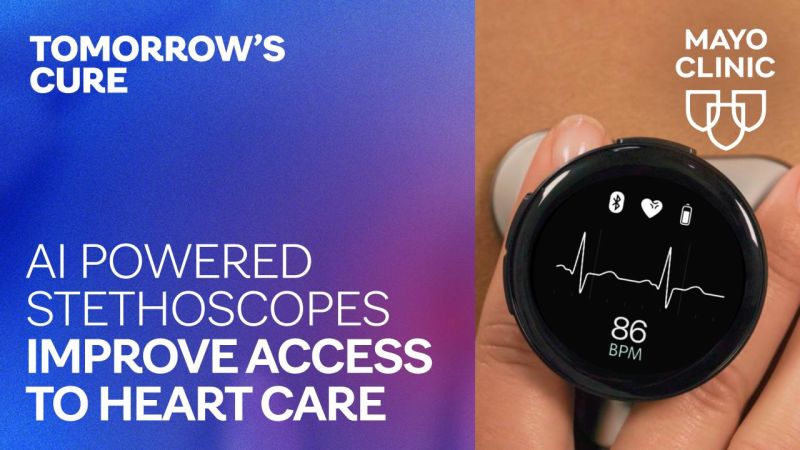
Most heart failures do not begin in emergency rooms or intensive care units. They begin with a sound too faint or too easily missed. Millions of people live with undiagnosed heart conditions, including heart failure and other diseases. In their early stages, they rarely cause pain or any obvious symptoms. Even though modern medicine offers advanced therapies, they come in delayed detection. By the time a person feels something is wrong, the disease may have already progressed to a serious stage.
This is where one of medicine’s oldest tools, the stethoscope has traditionally played an important role. Doctors have used it to listen to the heart and lungs, picking up clues hidden in the body’s internal sounds. But this relies on human hearing and experience. Thus, it comes with several challenges:
- Human Hearing Constraints: The human ear has a limited range and some important heart sounds fall outside what we can reliably detect. Others are so faint that they can easily be missed, especially in a busy clinical setting.
- Subjective Interpretation: Even when a sound is audible, its meaning is not always clear. Doctors rely on training and experience to interpret what they hear. This means that two doctors might interpret the same sound differently and early-stage conditions can be missed.
- Environmental Noise: Hospitals and clinics are not always quiet. Background noises from equipment, conversations or even patient movement can interfere with what a doctor hears through the stethoscope affecting the listening.
- Time Constraints: Routine check-ups are usually quick. A doctor may only have a few seconds to listen to the heart. If an abnormal sound is very subtle, it might not be detected during that short check-up time.
AI-Enabled Digital Stethoscopes
Today, we are witnessing an Artificial intelligence (AI) combined digital stethoscope technology, which redefines how we detect and act upon early signs of heart disease. Instead of relying only on what a doctor can hear, these AI-enabled stethoscopes convert heart sounds into data, which are objective and highly accurate. These data can be studied, compared and understood in deeper levels.
Simultaneous Sound and ECG Capture
Many advanced devices now combine heart sound recording with electrocardiogram (ECG) data. This means that they can analyse both how the heart sounds and how the heart functions internally. By combining both the data, doctors get a much more complete picture of heart health. It is like seeing both the movement and the signal behind it at the same time.
Advanced Noise Filtering
AI algorithms can isolate relevant cardiac signals while filtering out background noise. This ensures clarity even in less-than-ideal environments.
One of the biggest advantages of AI is its ability to filter noise. They can remove background noise focusing only on relevant heart sounds and even enhancing sound clarity in noisy environments. This makes the diagnosis process more reliable, especially in busy clinics or hospital settings.
Detection Beyond Human Hearing
AI systems can detect frequencies that humans cannot hear. These hidden signals can carry important information about early-stage disease that would otherwise go unnoticed. These signals may be invisible to the human ear but not to AI.
Data Conversion
When placed on the chest, a digital stethoscope captures heart sounds just like a traditional one. But instead of simply transmitting them to the ear, it directly converts them into digital signals. These can be shared with specialists remotely and stored for future reference. This alone is a big step as it allows doctors to revisit and review sounds rather than relying only on their memory.
The Shift of Healthcare from Reaction to Prevention
Doctors often treat diseases after symptoms appear. AI-powered stethoscopes are helping shift this model toward prevention. Various studies also show that AI-powered stethoscopes can detect major heart conditions up to four times faster than traditional methods. But speed is only part of the story. Accuracy is where these tools truly shine.
And if someone asks me if it really matters in real life, I will definitely say yes. Imagine a patient visiting a clinic for a routine check-up. They feel fine with no symptoms. The doctor listens to their heart for a few seconds and hears nothing unusual. But with AI-powered stethoscopes, a simple 30-second check could change that person’s life, improving patient quality of life.
As a leader in a health tech company, I think that AI-powered stethoscopes are just the beginning. Healthcare is moving toward a model where early detection is the goal and not an exception.
What are your thoughts on this development?


The Hidden Cost of Labelling Problems Too Quickly

Will Your Team Crumble If You Leave the Room? A Lesson in True Leadership

Forget Silicon Valley, The Next Big Healthcare Leap Is Happening in Dubai