
Imagine walking into a hospital a few years from now. Your doctor listens to your symptoms, reviews your medical history and examines your test results. But alongside the doctor is another source of intelligence, one that can analyse thousands of medical images, identify patterns across large volumes of patient data and support clinical decisions in seconds.
Your next doctor may live inside a computer as artificial intelligence is becoming part of the healthcare decisions that shape diagnosis and treatment. From AI systems that help detect tuberculosis and lung diseases to hospitals integrating AI tools into diagnostic workflows, artificial intelligence is moving from research laboratories into real clinical environments.
But how much should a machine be trusted with human decisions?
AI Becomes Real in Indian Healthcare
For years, artificial intelligence in healthcare was discussed as a future possibility. That future is already taking shape. India's healthcare system is beginning to use AI across multiple areas, including medical imaging, disease detection, clinical documentation, diagnostics, patient monitoring and decision support.
Companies such as Qure.ai have shown how AI can assist healthcare professionals by detecting conditions such as tuberculosis and other lung diseases. Major healthcare institutions are also exploring how AI can improve clinical workflows. Apollo Hospitals, for example, has been investing in digital health technologies and AI-driven approaches across different areas of healthcare. The objective is not simply to introduce more technology into hospitals. It is to make healthcare delivery faster and more efficient. Also, AIIMS (All India Institute of Medical Sciences, New Delhi) has built an AI-powered clinical decision system that decides what treatment patients should get. This represents a major shift. There is a difference between AI helping organise information and AI influencing what happens next to a patient. The closer technology moves towards clinical decision-making, the more important trust becomes.
Stronger Standards for Clinical AI
The potential of AI in healthcare is difficult to ignore. A single patient journey can involve thousands of data points. AI systems can process and analyse large volumes of information much faster than any individual human being. For a country as large and diverse as India, the possibilities offered are really important. There are world-class hospitals and specialists, but access to quality healthcare is not equally distributed. Some regions have limited access to specialist doctors and advanced diagnostic facilities. Healthcare professionals work under intense pressure, managing large numbers of patients every day. AI could help bridge some of these gaps. But “could help” is not the same as “should be trusted without question”.
All AI systems does not carry the same level of risk. An AI tool that helps schedule appointments is very different from an AI system that influences whether a patient receives a particular treatment. The consequences are not comparable. Healthcare professionals need systems that provide meaningful information about the factors influencing an AI recommendation. The level of explanation may vary depending on the technology and clinical use case, but the principle remains the same. High-impact decisions require a high degree of transparency and accountability.
India is also developing its approach to responsible AI in healthcare. Through regulatory and institutional initiatives, the discussion is gradually expanding beyond the question of how quickly AI can be deployed. A more important question is emerging on how can AI be deployed in a way that clinicians can trust and patients can rely on?
Trust is the New Standard for AI in Healthcare
The closer artificial intelligence moves toward influencing clinical decisions, the more important oversight, validation and accountability become. Recent regulatory developments highlight this shift. The FDA’s decision not to move forward with a proposal that would have reduced oversight for certain AI-enabled medical devices is an example.
India’s evolving regulatory and policies reflect the growing focus on responsible adoption. Organisations and initiatives such as the Central Drugs Standard Control Organisation (CDSCO), Strategy for Artificial Intelligence in Healthcare (SAHI), and BODH are contributing to conversations around how AI can be evaluated, governed and integrated into healthcare systems responsibly. The direction of this conversation is important. Instead of asking only, “How do we deploy more AI?”, healthcare stakeholders are asking, “How do we deploy AI that clinicians can trust and patients can rely on?”
For clinicians, trust means knowing when an AI recommendation is dependable, understanding its limitations and retaining the ability to make the final clinical judgement. For patients, it means confidence that technology is supporting their care. For healthcare organisations, it means adopting solutions that are not only technically capable but also clinically secure.
The Future of AI in Healthcare
Healthcare has never adopted technology on promise alone. Every meaningful advancement must prove that it works in the conditions where it will actually be used. AI will be held to the same standard and in some areas, a stricter one. They have always rewarded innovation that earns evidence. A new medicine must be tested. A new treatment must be evaluated. A medical device must demonstrate that it can be used safely and effectively. AI should not be treated differently simply because the technology is new or powerful. In fact, AI may need to raise the bar even further. The next phase of healthcare AI will be shaped by building that confidence in patients offering transparency without overwhelming patients with technical complexity. They deserve to know when AI contributes to their care and what role it plays in decisions affecting them
AI will undoubtedly transform healthcare, and the technologies that truly succeed will be the ones that earn trust through evidence, transparency, validation and real-world clinical value. AI does not change the standards of healthcare. It should raise them.


What Leadership Qualities Are Crucial in the Healthcare and Hospitality Industries?

You Won't Believe This One Trait Successful Leaders Have in Common!
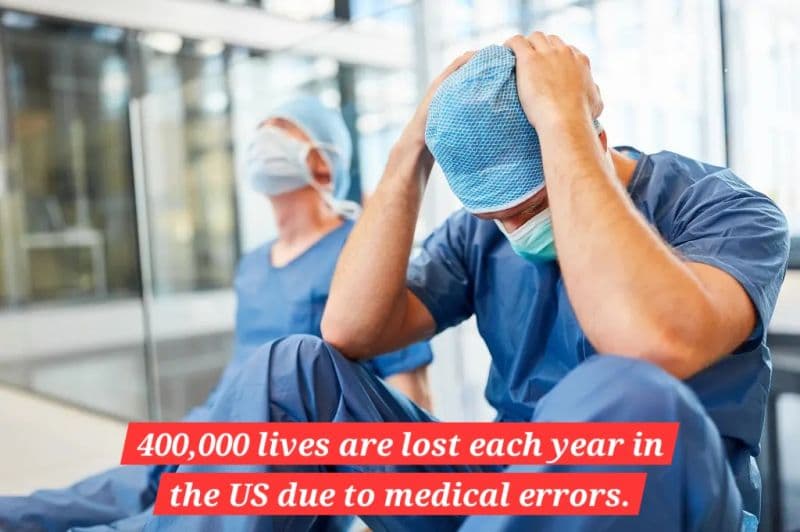
Is Your Healthcare Team Making a Deadly Mistake? Unmasking the Real Culprit!